
Electroculture
Ancient Science · Natural Energy · Modern Application
The Fibonacci Coil Antenna — History, Theory & Construction
History
Electroculture — using atmospheric and earth electrical energy to stimulate plant growth — dates to 1781, when French naturalist Lacépède observed faster germination in electrically charged water. Research flourished through the 19th century, peaking between 1890 and 1930 with formal European field trials showing promising but variable results.
French agronomist Justin Christofleau filed a patent in 1934 for a copper-and-zinc antenna system claiming up to 200 percent yield increases without fertilizers. Georges Lakhovsky simultaneously developed the open-ring antenna, theorizing all living cells emit electromagnetic oscillations. The adoption of cheap synthetic fertilizers after World War II ended mainstream research — though independent growers never abandoned it. A documented footnote: the British Government ran twenty years of secret electroculture research between the World Wars, stamping all positive findings confidential. The reason was never explained.
Theory
Two sources of energy
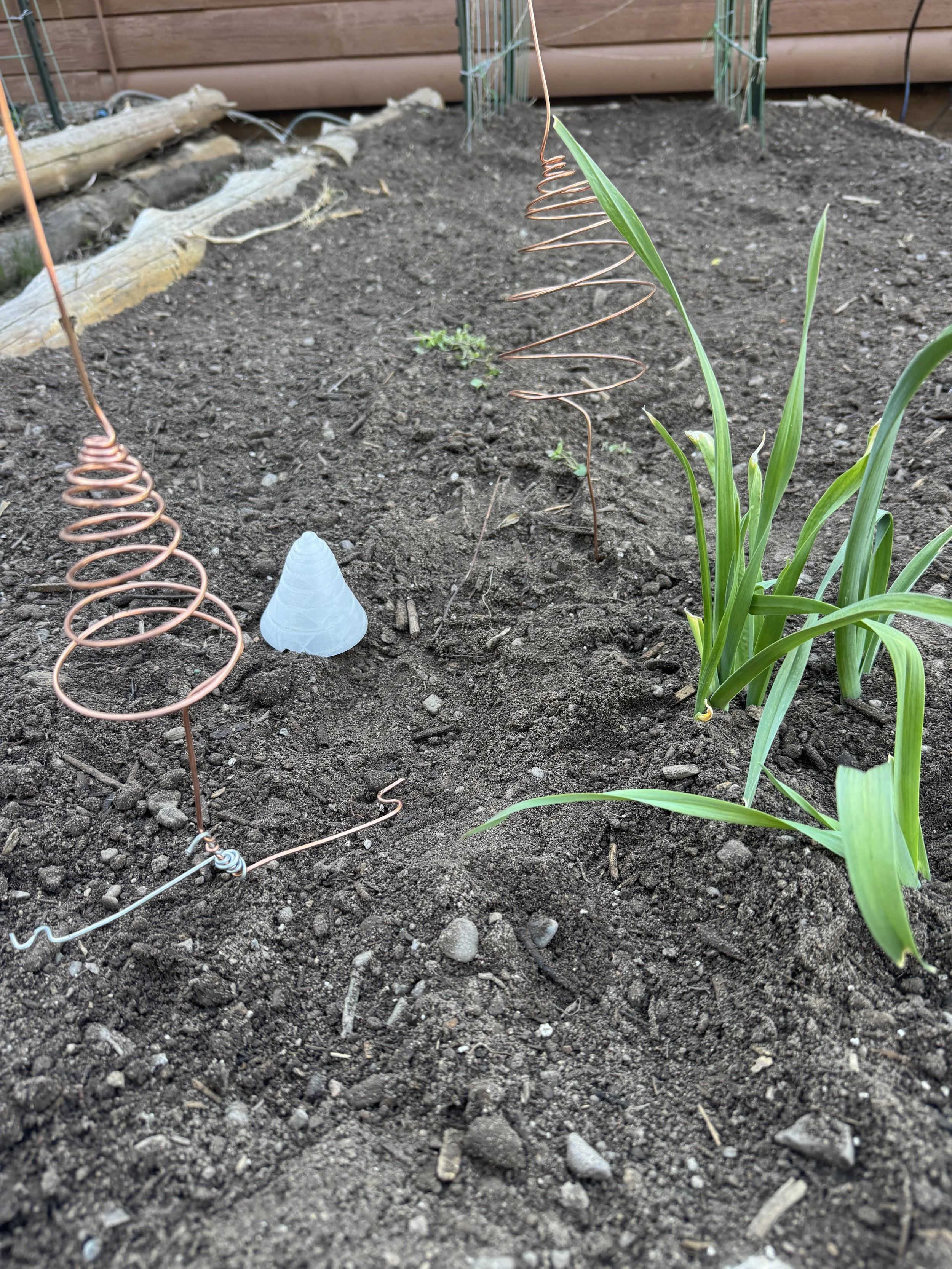
Atmospheric electricity — the continuous 300,000-volt charge differential between the ionosphere and earth — is collected by the copper coil pointing skyward. Telluric current — slow ground currents flowing south-to-north through soil along magnetic field lines — is collected by the zinc wire buried southward. Together they deliver a dual-polarity electrical input to the root zone.
The bimetallic junction
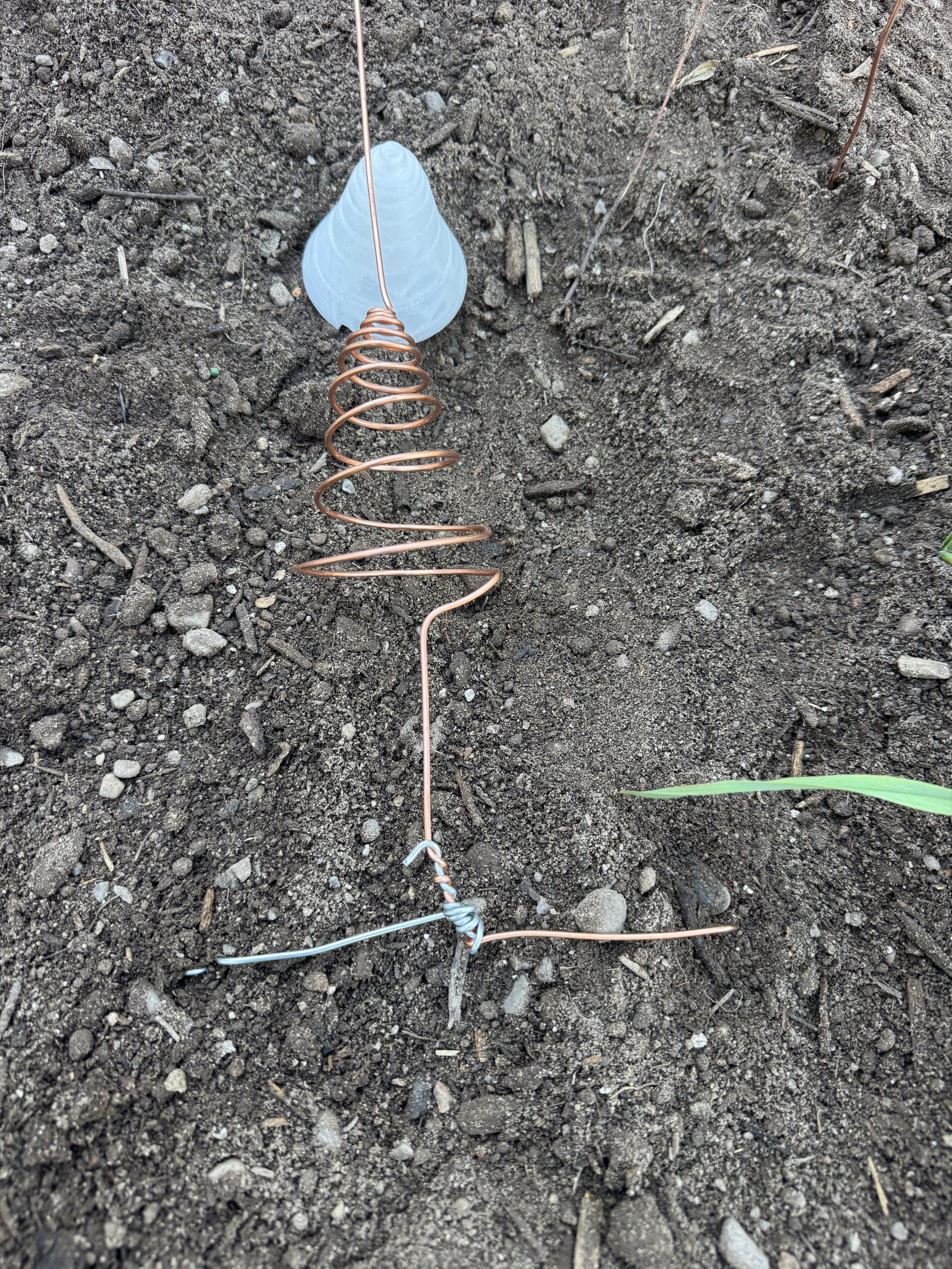
Where copper and zinc meet at soil level a galvanic voltage of ~1.1 volts is generated — the same principle as a battery. Christofleau placed this junction deliberately at the soil surface: the exact boundary between the atmospheric domain above and the telluric domain below.
Fibonacci, golden ratio & Tesla 3·6·9
Plants grow according to the Fibonacci sequence and golden ratio (φ = 1.618) — visible in sunflower spirals and pine cone scales. The coil mirrors this geometry: diameters and zone heights cascade at phi ratios, pitch closes at 1/φ per zone. Tesla's 3-6-9 governs turn distribution — three open turns collect ground energy, three tapering turns transition, three closed turns concentrate atmospheric energy at the tip.
Antenna — Materials & Assembly
| Section | Length | Copper wire | Zinc / Galvanized |
|---|---|---|---|
| Bare tip | 17–23" | 12 AWG — points magnetic north. Primary atmospheric collector. | None |
| Zone 3 3 closed turns |
1" | Tight turns — atmospheric concentration zone. | None |
| Zone 2 3 tapering turns |
1⅝" | Closing at phi rate — Fibonacci transition zone. | None |
| Zone 1 3 open turns |
2⅝" | Wide open — clockwise upward. Ground energy zone. | None |
| Bond point | Soil surface | Tail twisted to zinc — bimetallic junction. | 16–18 AWG twisted to copper tail here. |
| Buried ends | 4–5" | Copper buries north — atmospheric ground. | Zinc buries south — telluric ground. Replace every 1–2 seasons. |
Expected Benefits
- Faster germination — one of the oldest and most consistently reported effects since 1781.
- Increased yield — Christofleau reported up to 200% improvement; modern growers report larger fruit and more prolific flowering.
- Improved root development — galvanic current at the bond point theorized to enhance ion transport across root cell membranes.
- Reduced fertilizer dependence — atmospheric and telluric energy inputs partially substitute for added nutrients.
- Pest & disease resistance — electrically stimulated plants reported to produce stronger cell walls and more robust immune responses.
- Drought tolerance — improved root depth and cell efficiency reported to reduce watering frequency.
- Zinc micronutrient delivery — sacrificial zinc element slowly releases trace minerals directly to the root zone — a documented benefit independent of all other electroculture theory.
Installation
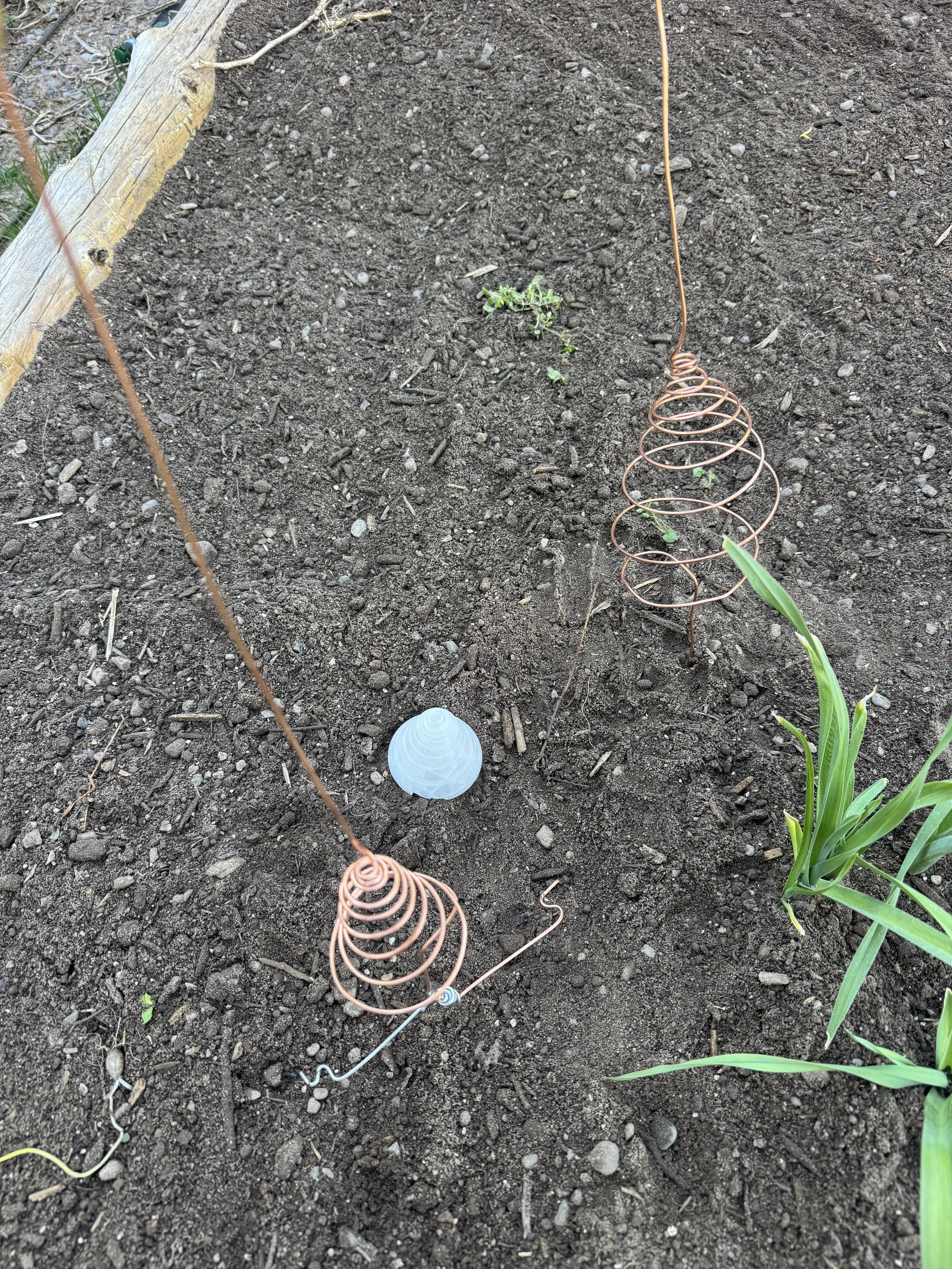
- Antenna on south side of planting — tip toward magnetic north.
- Bond point exactly at soil surface — not above, not below.
- Zone 1 first turn ¼"–½" above soil — no direct coil-wire soil contact.
- Wind clockwise upward (Northern Hemisphere).
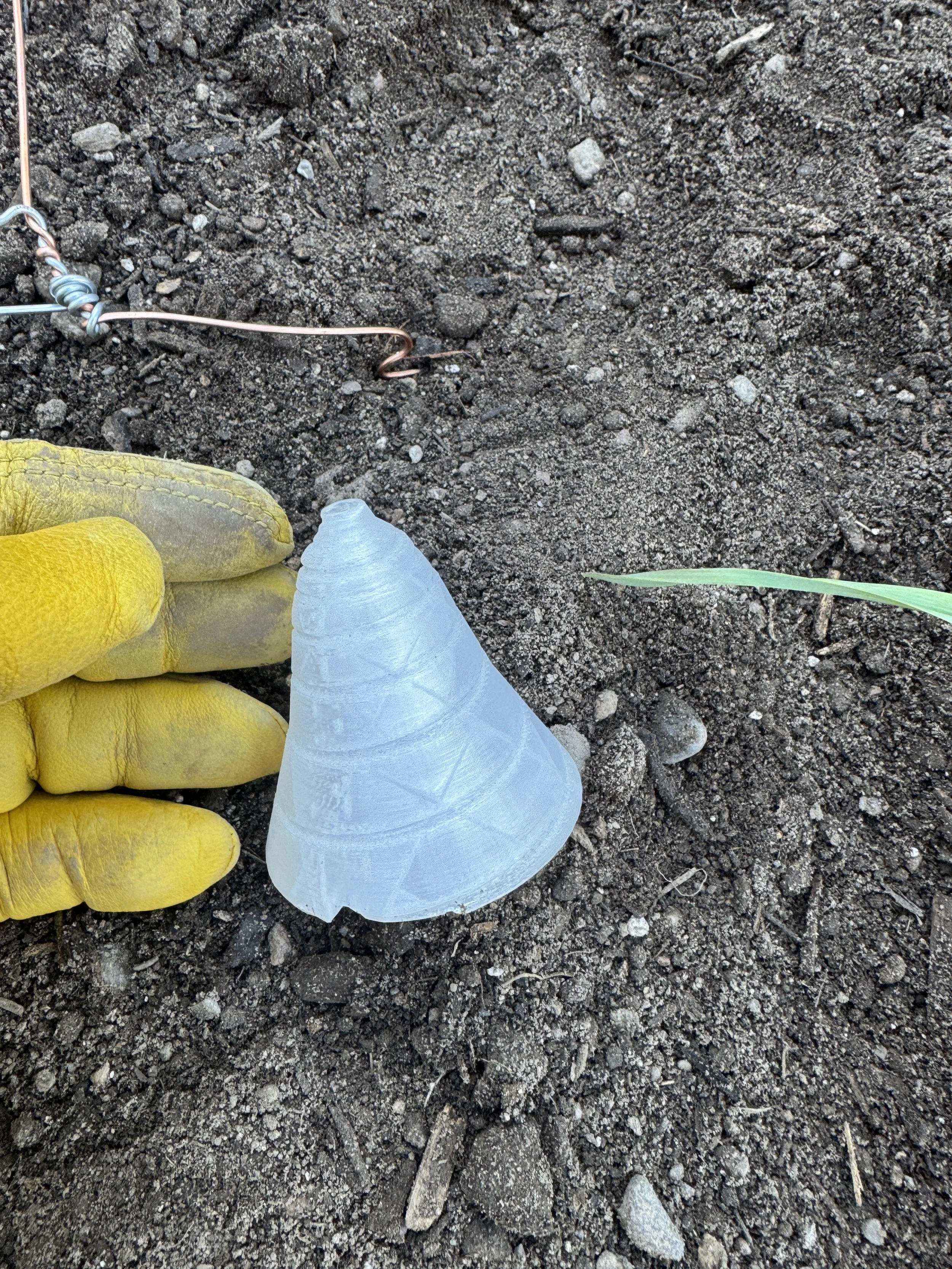
- Lakhovsky open ring at soil level — gap facing north, ends not touching.
Electroculture
Source References by Topic