
Companion Planting in Containers (6–14 Inch Pots That Actually Work)
Companion planting isn’t just for garden beds.
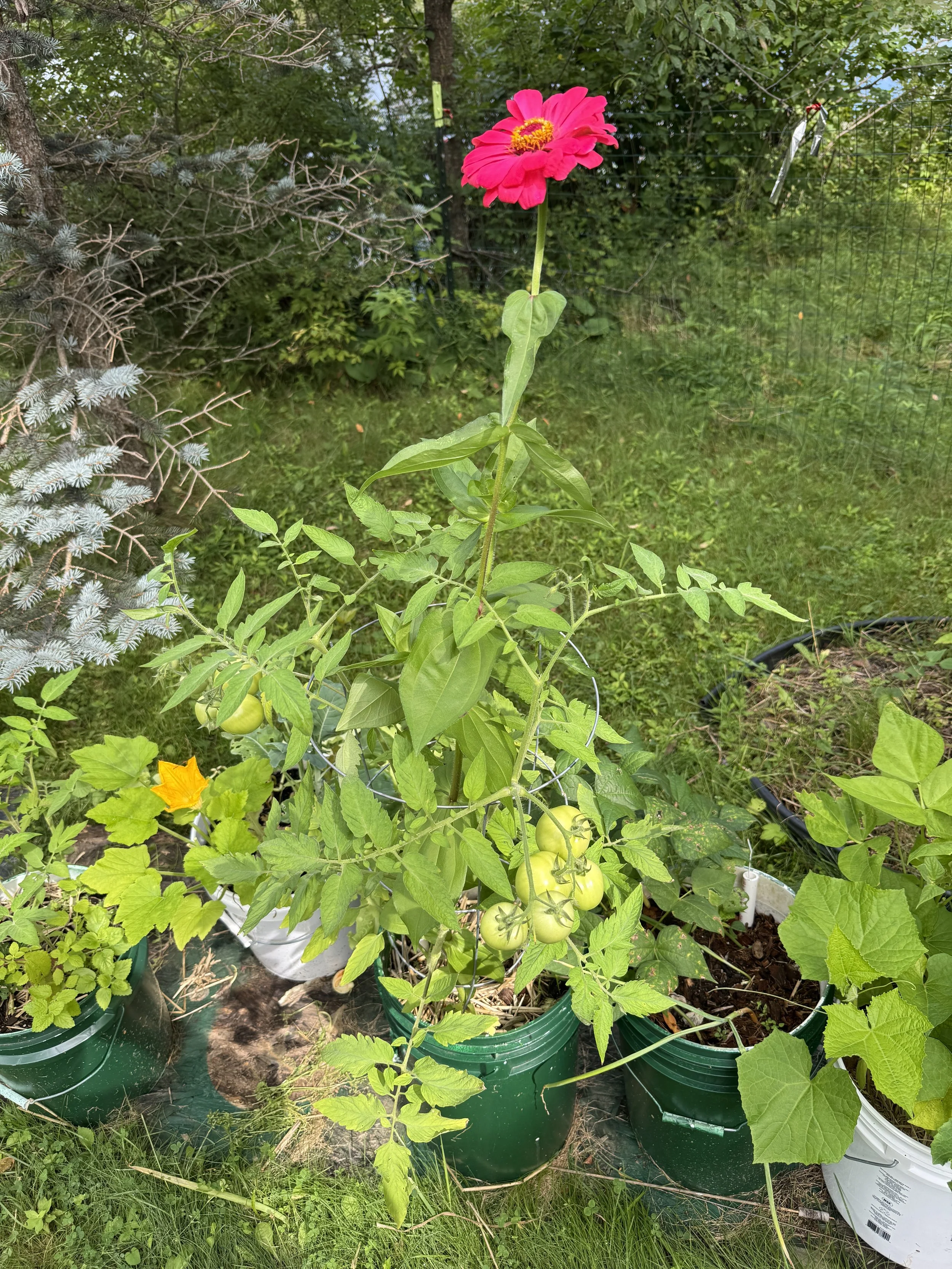
Plum Tomato, Zinna, and Bush Bean
With the right combinations, you can grow multiple plants in a single container that support each other’s growth, improve pest resistance, and make better use of limited space.
But containers change the rules.
You’re working with limited soil volume, shared water, and tighter root zones—so combinations need to be intentional.
Below are proven companion groupings that work well specifically in 6–14 inch containers.
Tomato + Marigold/Zinnia + Bush Beans (Balanced and Productive)
Best container size: 12–14 inch
This is one of the most complete small-container ecosystems.
Tomatoes are heavy feeders and benefit from pest protection. Marigolds help deter common pests, while bush beans contribute nitrogen back into the soil.
Layout:
Place the tomato centered or slightly offset, beans along one side, and marigolds near the edges.
Variations:
Roma Tomato + Cilantro + Leek/Green Onion = Salsa Mix
Cherry Tomato + Borage + Cucumber (vine) = Salad Toppings with Edible Flowers
Peppers + Basil + Onions
Best container size: 10–12 inch
This is a compact, kitchen-friendly combination.
Basil pairs well with peppers and may enhance growth. Onions or chives help deter pests like aphids, while all three plants share similar watering needs.
Layout:
Use the pepper as the anchor, basil nearby, and onions spaced around the perimeter.
Variations:
Pepper + Cilantro + Leek/Green Onion
Pepper + Cucumber (vine) + Nasturtium = Sweet pepper juicy cucumber, with peppery flowers
Lettuce + Cucumber (vine) + Radish
Best container size: 8–12 inch
This combination requires maximum vertical soil usage and space around the container.
Lettuce occupies the top layer, radishes grow quickly in the mid-zone, and cucumber crawls out of the container on a trellis or ground. This reduces competition while increasing total yield.
Layout:
Lightly broadcast lettuce, space radishes evenly, and plant carrots deeper between them.
Variations:
Mesculin Salad Bowl mix + Cilantro + Dill = Seed herbs on opposite sides of the container to spice up the weekly salads.
Romaine Lettuce + Cucumber (vine) + Nasturtium = Sweet and Spicy Salad container
Cucumbers + Nasturtium + Dill (Natural Pest Defense)
Best container size: 12–14 inch (with support)
This combination is built around pest balance.
Nasturtiums can act as a trap crop, attracting aphids away from cucumbers. Dill attracts beneficial insects, helping create a more resilient system.
Layout:
Use a small trellis for cucumbers, let nasturtium trail over the edge, and place dill opposite for balance.
Maximum Nutritional Yield: Kale + Chard + Collards + Parsley
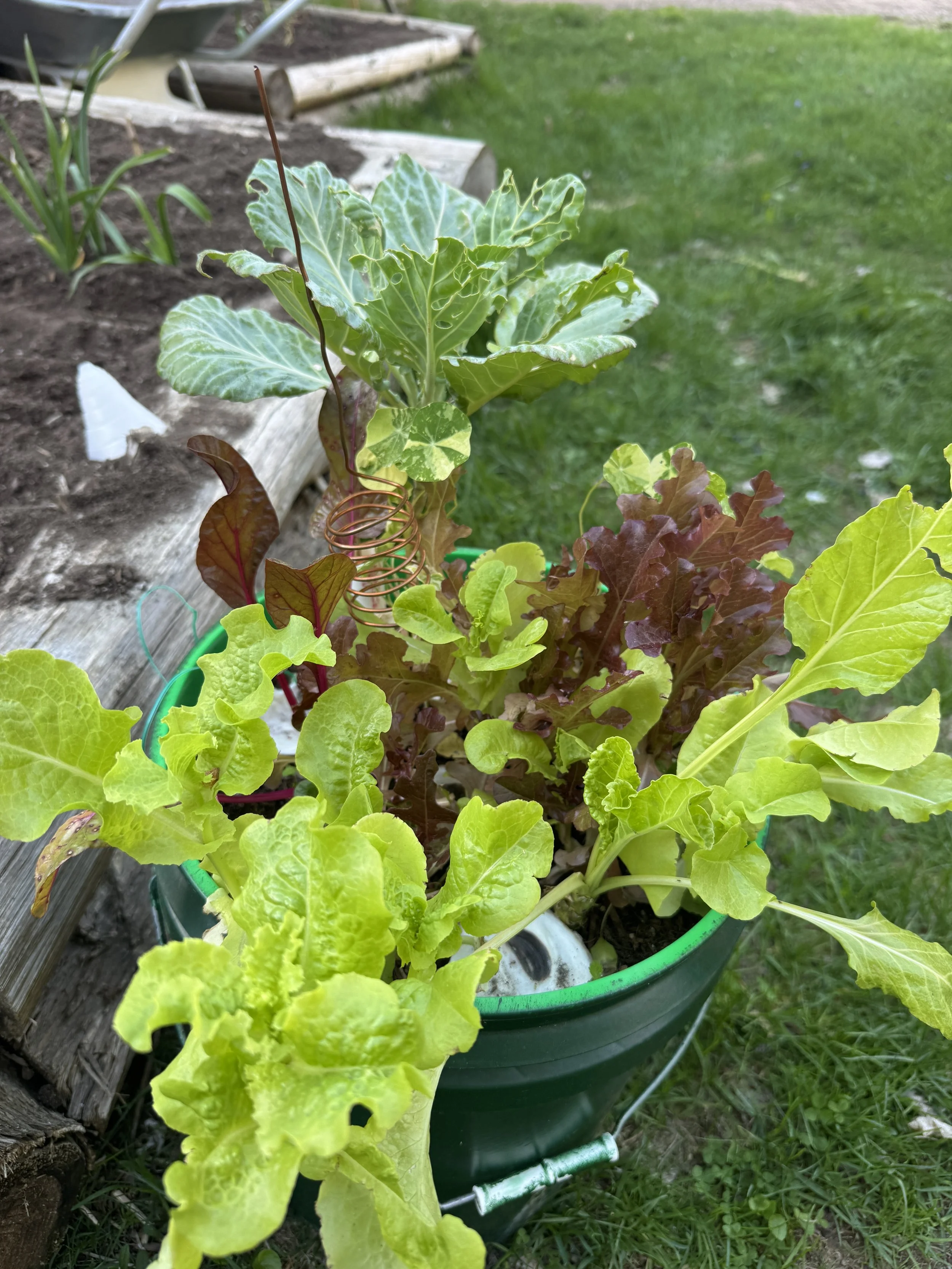
Green+Red Chard, Collards, Dino Kale, Green+Red Lettuce, Nasturtiums
Best container size: 10–12 inch
This combination maximizes nutrients per square inch.
Kale is one of the most nutrient-dense greens available. Parsley adds concentrated micronutrients, and green onions provide continuous harvest while minimizing root competition.
Layout:
Place Kale, Chard, and Collards in small center circle, and parsley around the edges.
Harvest advantage:
This setup supports continuous “cut-and-come-again” harvesting with high nutritional output over time.
Maximum Yield by Weight: Zucchini/Squash + Pole Beans + Nasturtium
Best container size: 14 inch
This setup focuses on producing the most total harvest weight.
Zucchini produces large fruits quickly. Pole beans add additional yield and support soil health, while nasturtium helps manage pests and utilize unused space.
Layout:
Position zucchini slightly off-center, beans on the opposite side near a trellis, and nasturtium trailing over the edge.
Yield advantage:
High mass production in a relatively short growing window.
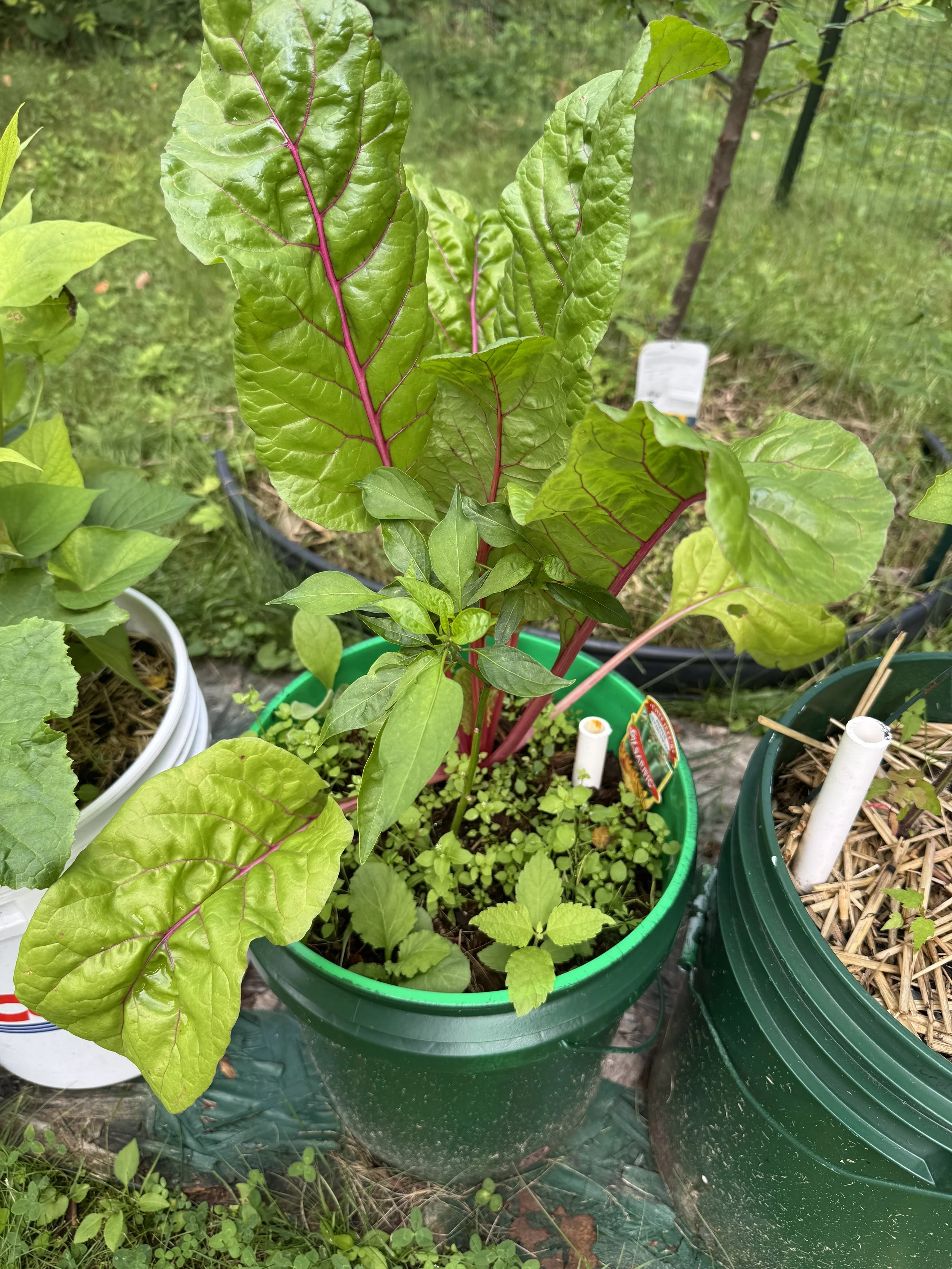
Serrano Pepper, Red Chard, Lemon Balm
What Makes a Good Container Companion Group
Successful combinations share three traits:
Similar water requirements
Compatible root structures (layered when possible)
Balanced growth habits (no aggressive crowding)
How the Bucket Oasis Enhances Companion Planting
Companion planting increases plant density—which increases demand on water consistency.
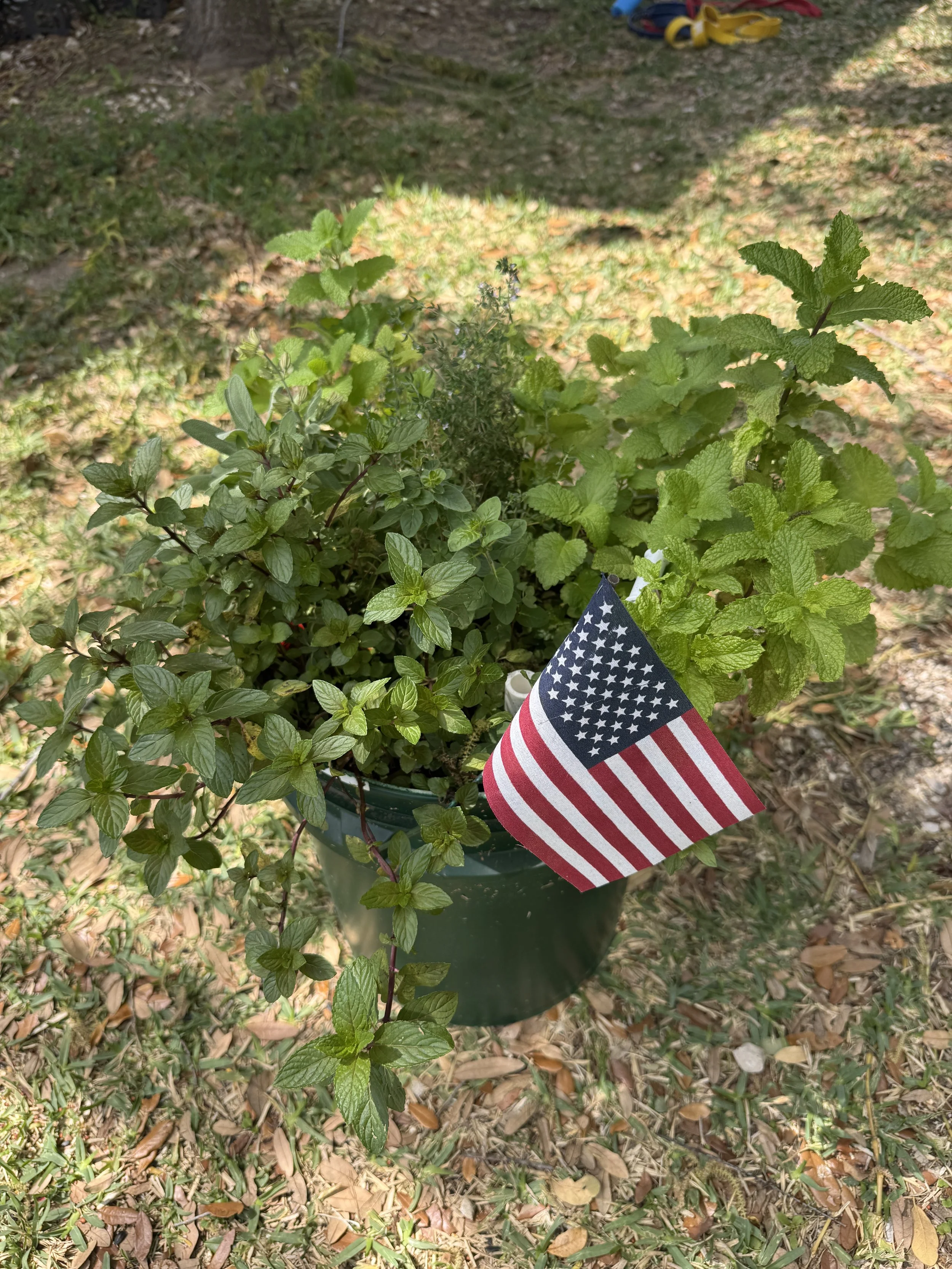
Mint, Chocolate Mint, Lemon Balm, Thyme, Oregano, and Sage
In traditional containers, this often leads to:
uneven moisture distribution
dry pockets between plants
overwatering in some zones and underwatering in others
The Bucket Oasis addresses this by changing how water is delivered.
A reservoir provides a steady water source below the soil
Wicks distribute moisture upward across multiple نقاط in the container
Plants draw water based on demand, not timing
In mixed plant containers, this creates a more balanced environment where:
all plants have access to moisture
competition is reduced
root zones stay more stable
This is especially valuable in companion setups where different plants share the same soil volume.
Instead of managing watering for multiple plants individually, the system maintains a consistent baseline for all of them.
A Quick Note on Watering
Higher plant density increases water demand.
In mixed containers, uneven watering leads to competition and stress between plants. Consistent moisture distribution becomes critical for balanced growth.
Start Simple
Begin with one combination and observe how it performs.
As you learn how plants share space, water, and nutrients, you can refine your layouts and experiment further.
A well-designed container doesn’t just grow plants—it creates a small, efficient ecosystem.
