
How the Bucket Oasis works (and why it’s different)
In the first post, we talked about the core problem: inconsistent watering.
Now let’s look at how the Bucket Oasis actually solves it—from a mechanical, root-level perspective.
The system below your soil
At a glance, the concept is simple:
A false bottom creates a water reservoir at the base of the container
Soil sits above that reservoir
Wicks connect the water below to the soil above
But that simple structure changes how water moves—and how roots behave.
Instead of watering from the top and hoping it distributes evenly, moisture is introduced from below and pulled upward naturally.
Water moves upward, not downward
Traditional watering relies on gravity:
You pour water from the top, and it moves downward—often unevenly.
This can lead to:
Dry pockets in the soil
Water channeling straight through
Oversaturation at the bottom
With the Oasis, water moves differently.
Through capillary action, moisture travels upward from the reservoir into the soil. The plant interacts with that moisture zone based on its needs.
That means:
The soil doesn’t flood all at once
Moisture is more evenly distributed
The root zone stays more stable over time
Why under-soil watering benefits roots
Roots don’t just need water—they need balance.
When watering from above:
The top layer gets saturated first
Oxygen levels drop quickly
Roots can become shallow or stressed
With under-soil watering:
Moisture is available lower in the container
Roots grow downward toward the water source
The upper soil stays more aerated
This creates a healthier root structure:
deeper, stronger, and less prone to stress.
The role of wicks (this is the key difference)
Not all self-watering containers are built the same.
Many rely on:
passive contact between soil and water
limited surface exposure
or inconsistent moisture transfer
The Bucket Oasis uses dedicated wicks to actively bridge the reservoir and soil.
That changes everything.
The wicks act as controlled pathways for water movement:
They pull water upward consistently
They distribute moisture across multiple نقاط in the soil
They maintain connection even as soil shifts or dries
Without wicks, moisture transfer can become unreliable—especially as soil compacts or separates from the reservoir layer.
With wicks, the connection stays active.
Consistency without intervention
Because the system is passive, it doesn’t rely on timing or user input.
No guessing when to water
No sudden flooding or drought cycles
No dependence on daily attention
The reservoir holds the supply
The wicks regulate the delivery
The soil and roots take what they need
It’s a closed loop that stabilizes one of the most unpredictable parts of plant care.
Designed to adapt, not restrict
The Bucket Oasis isn’t a fixed container—it’s an insert system.
That means:
It can adapt to different container sizes
Reservoir depth can vary
Wick placement can scale with the setup
This flexibility is important because different plants—and different environments—demand different water behaviors.
The system adjusts without changing the core principle.
Bringing it all together
At its core, the Bucket Oasis works by changing two things:
where water is stored (below the soil)
how water is delivered (through controlled wicking)
That combination creates a more stable moisture environment—without adding complexity.
In the next post, we’ll look at how to install the Oasis into different container types and how to dial it in based on what you’re growing.
Because once the system is in place, the setup is what unlocks its full potential.
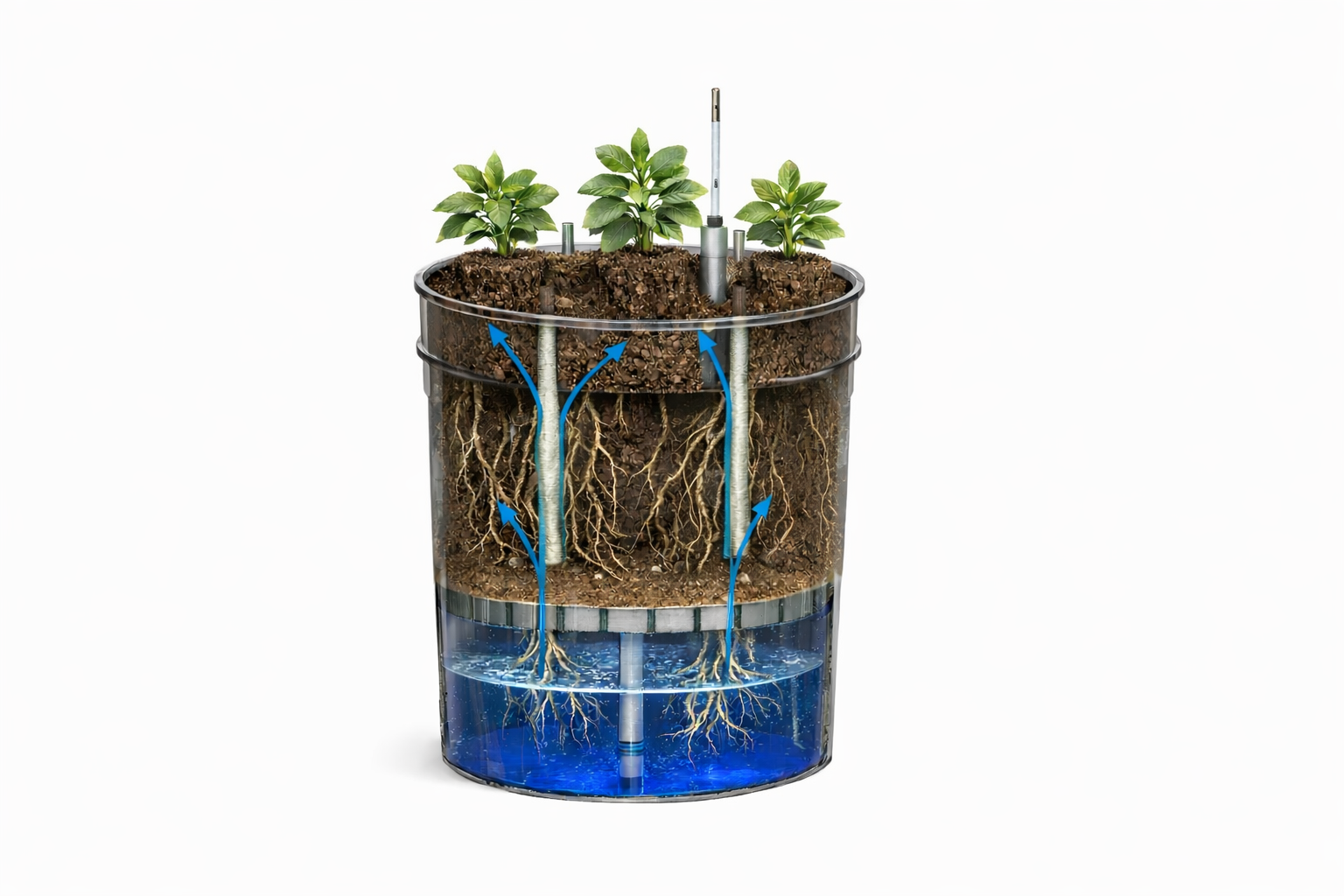
Oasis Insert Cross Sectional Infographic
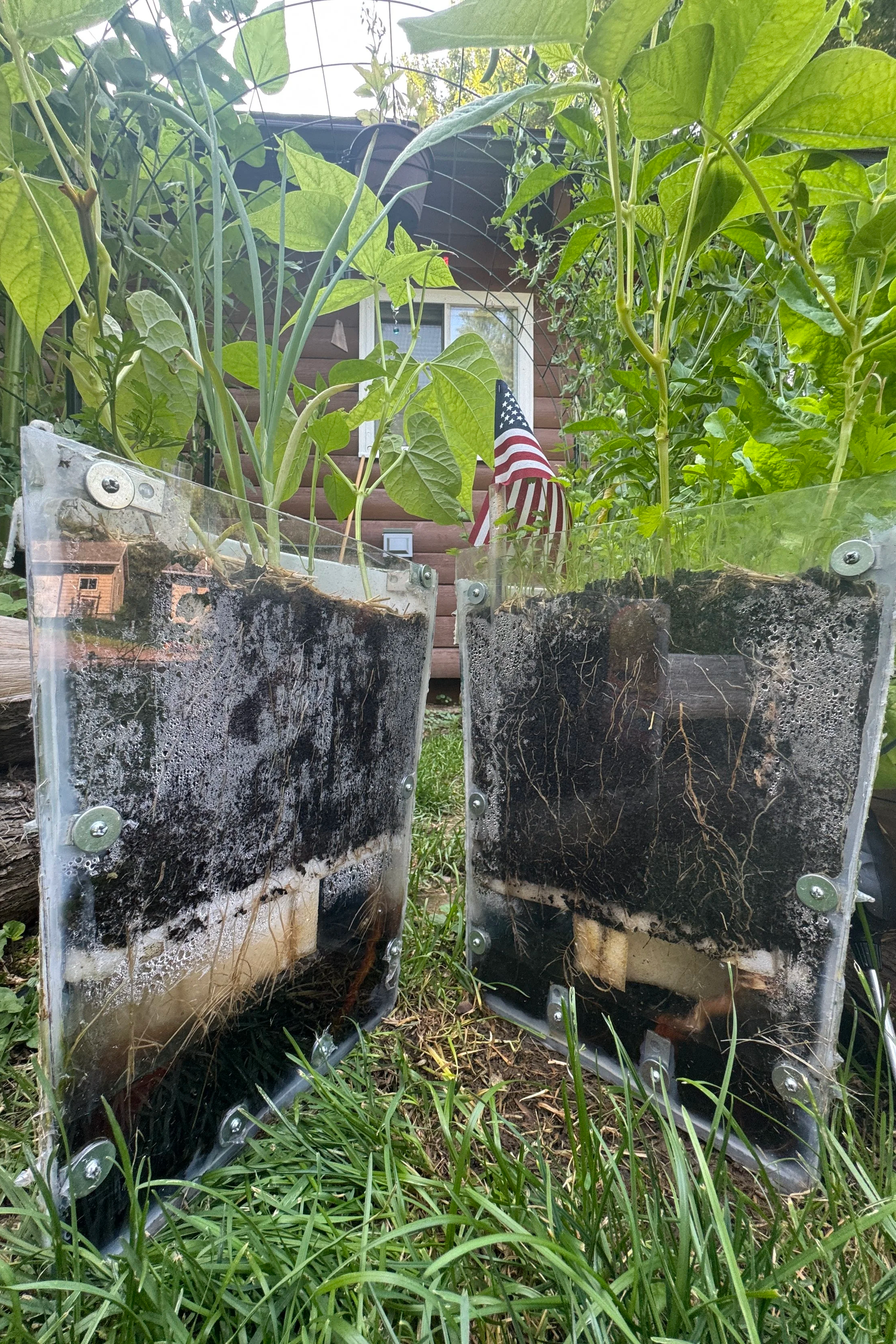
Actual Oasis Cross Sectional Image
