
How to Grow More in Less Space: High-Yield Container Gardening (With Data)
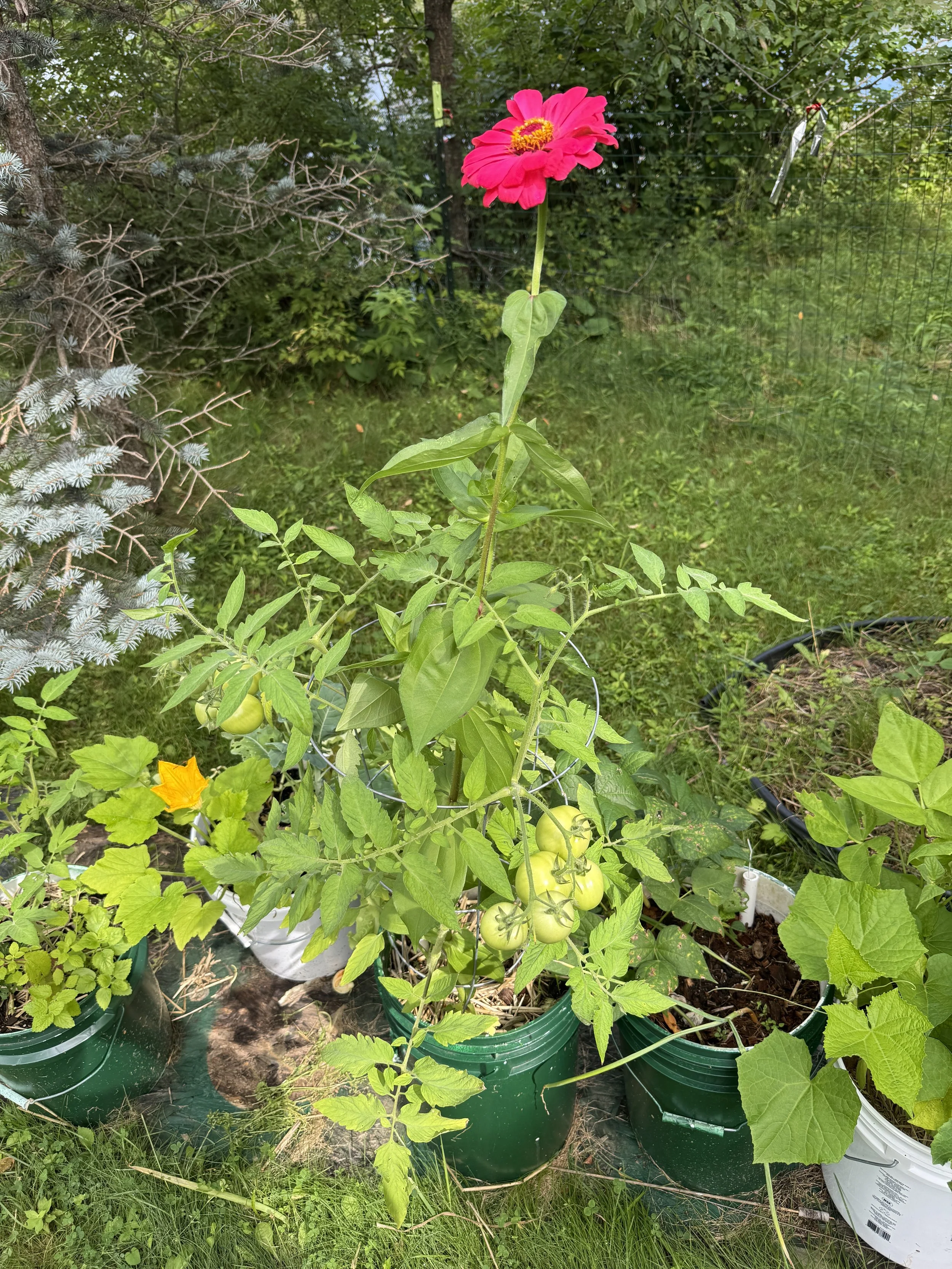
Maximizing yield in a small space isn’t about planting more—it’s about designing a system that uses space, light, water, and roots efficiently.
Research in container and intensive agriculture shows that yield increases come from:
better space utilization
consistent resource delivery
reduced plant competition
But there’s an important distinction most guides miss:
beginner yield vs optimized yield
The Core Principle: Yield per Volume, Not per Plant
Traditional gardening focuses on individual plants.
High-yield container gardening focuses on:
output per container
output per square foot
efficiency of inputs
Studies show optimized systems can increase yield per area by 30–100%+.
Source:
https://www.sciencedirect.com/science/article/pii/S0304423811000937
Companion Planting: Increasing Yield Through Plant Synergy
Companion planting improves efficiency by:
layering root systems
sharing nutrients
reducing unused soil
Intercropping systems show 20–60% higher total yield than single crops.
Source:
https://www.fao.org/3/x3531e/x3531e07.htm
Vertical Growth: Multiplying Output Without Increasing Footprint
Vertical growth converts unused air space into productive area.
Trellised plants can increase yield per square foot by 2–3x.
Source:
https://extension.psu.edu/vertical-vegetable-gardening
Root Optimization: The Hidden Yield Multiplier
Root conditions drive plant performance.
Stable moisture and aeration improve:
nutrient uptake
growth rate
yield consistency
Source:
https://www.fao.org/3/i2800e/i2800e.pdf
Beginner Yield Estimates (5-Gallon Container, Realistic Expectations)
These numbers reflect:
moderate crowding
basic care
some inconsistency (typical beginner conditions)
1) Cherry Tomato + Bush Beans
Beginner yield:
Tomato: 6–10 lbs
Beans: 0.5–1.5 lbs total
Total:
→ 7–11 lbs per season
Sources:
https://extension.umn.edu/vegetables/growing-tomatoes-home-garden
https://extension.umn.edu/vegetables/growing-beans
2) Pepper + Basil + Onion
Beginner yield:
Pepper: 2–4 lbs
Basil: 0.3–0.7 lb cumulative
Onion: 0.3–0.7 lb
Total:
→ 3–5 lbs per season
Sources:
https://extension.umn.edu/vegetables/growing-peppers
https://extension.umn.edu/vegetables/growing-herbs
3) Lettuce + Radish + Carrot (Per Cycle)
Beginner yield:
Lettuce: 0.5–1 lb
Radishes: 0.2–0.5 lb
Carrots: 0.5–1.0 lb
Total per cycle:
→ 1.2–2.0 lbs
Multiple cycles possible:
→ 2–5 lbs per season
Sources:
https://extension.umn.edu/vegetables/growing-lettuce
https://extension.umn.edu/vegetables/growing-root-crops
4) Zucchini (Compact) + Beans
Beginner yield:
Zucchini: 4–8 lbs
Beans: 0.5–1.5 lbs
Total:
→ 5–9 lbs per season
Source:
https://extension.umn.edu/vegetables/growing-summer-squash
Why Crowding Changes Everything
In a 5-gallon container (~12" diameter), space is limited.
As plant density increases:
individual plant size decreases
total yield increases only up to a point
excessive crowding reduces overall output
This is known as the density–yield relationship.
Source:
https://www.fao.org/3/x5490e/x5490e0a.htm
Maximum Optimized Yield
These numbers assume:
optimal spacing (not overcrowding)
consistent watering
strong sunlight
proper fertilization
1) Tomato + Beans (Optimized)
→ 10–16 lbs total
2) Pepper System (Optimized)
→ 4–7 lbs total
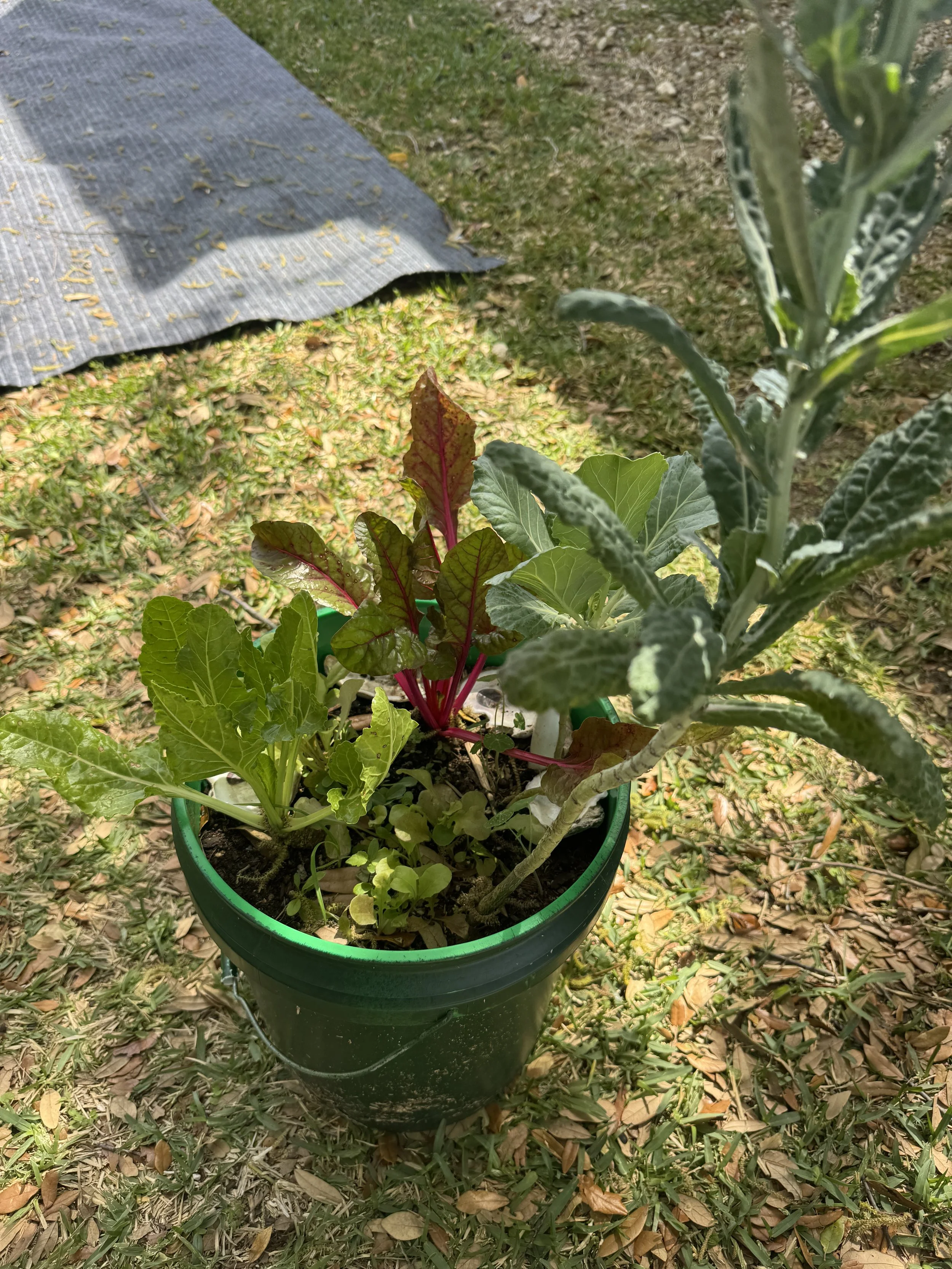
3) Root + Greens System (Optimized, Multiple Cycles)
→ 3–6 lbs per season
4) Zucchini System (Optimized)
→ 7–12 lbs total
Key difference vs beginner yields:
better spacing decisions
less stress from water inconsistency
more efficient root function
Where Most Yield Is Lost
The gap between beginner and optimized yield comes from:
inconsistent watering
nutrient loss
root stress cycles
overcrowding mistakes
Plants don’t fail—they underperform.
How the Bucket Oasis Helps Close the Yield Gap
High-density systems increase competition—especially for water.
The Bucket Oasis helps by:
maintaining consistent moisture
reducing plant-to-plant water competition
preventing dry/wet cycling
supporting continuous root activity
This allows:
more stable growth
less yield loss from stress
slightly higher usable plant density
It doesn’t eliminate crowding limits—but it helps you get closer to optimal output.
What Actually Increases Yield
The biggest gains come from:
Vertical growth → 2–3x potential increase
Companion planting → 20–60% increase
Proper spacing (avoiding over-crowding losses)
Consistent water and nutrient availability
These factors compound together.
The Takeaway
A single 5-gallon container can realistically produce:
7–11 lbs (beginner setup)
10–16 lbs (optimized system)
The difference isn’t the plant—it’s the system.
When space, roots, water, and plant combinations are aligned, even small containers can produce meaningful amounts of food.
Because high yield isn’t about packing plants in.
It’s about getting more out of the space you already have.
