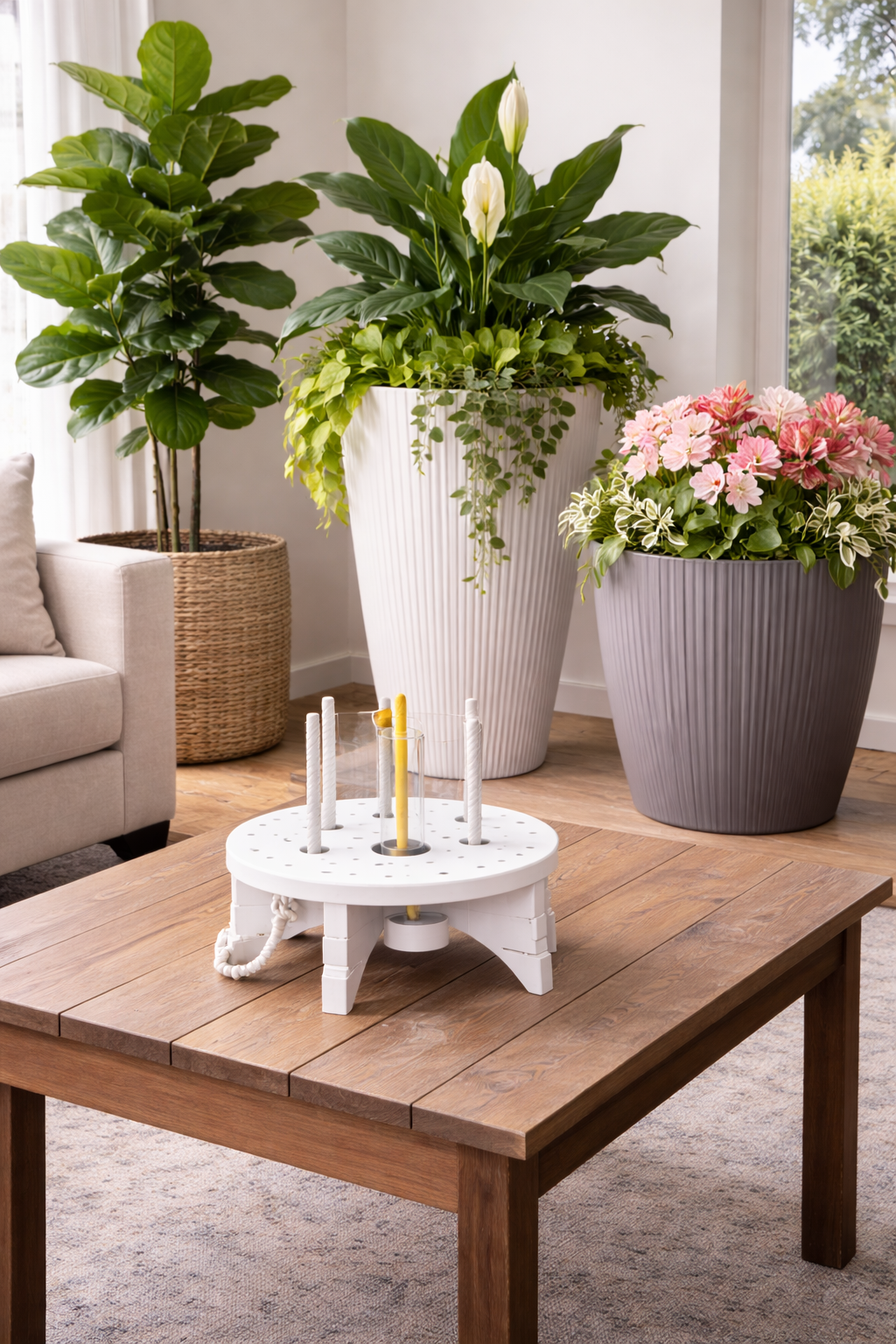
Indoor Plants Made Easy: Health, Mood, and Lifestyle Benefits (Without the Watering Stress)
For many people, indoor plants are appealing—but not practical.
The idea sounds great:
A greener space
Cleaner air
A calmer environment
But the reality often includes:
forgetting to water
overwatering
plant stress or death
ongoing low-level anxiety about “doing it right”
That friction alone keeps a lot of people from ever starting.
But when watering becomes consistent and low-effort, the entire equation changes.
Why People Avoid Indoor Plants (And What Changes That)
Surveys and behavioral studies show that time commitment and care uncertainty are major barriers to plant ownership.
Common concerns:
“I’ll forget to water it”
“I don’t know how much water it needs”
“I’ve killed plants before”
This creates hesitation—even when people want plants in their space.
When watering becomes passive and consistent:
the biggest failure point is removed
confidence increases
more people are willing to keep plants long-term
This is less about gardening skill—and more about system reliability.
Health Benefits of Indoor Plants
Research consistently shows that indoor plants positively impact mental well-being.
Studies have found that:
interacting with indoor plants can reduce psychological stress
exposure to greenery can lower heart rate and blood pressure
caring for plants can improve attention and mood
Supporting research:
Even passive exposure—just being around plants—has measurable calming effects.
Emotional and Psychological Connection
Plants introduce something unique into indoor spaces:
a living, responsive element.
Research shows that caring for plants can:
create a sense of responsibility and routine
improve emotional stability
provide a low-pressure form of nurturing
This is particularly relevant in:
remote work environments
urban living spaces
high-stress routines
Reference:
Unlike digital or static environments, plants change over time—which creates engagement.
Air Quality and Environmental Benefits
Indoor plants are often associated with air purification.
Early research (including NASA studies) showed that certain plants can remove airborne compounds in controlled environments.
More recent research clarifies that:
while real-world air purification impact is modest
plants still contribute to improved perceived air quality and humidity balance
Additional research:
The practical benefit is less about “air filtration machines” and more about:
improving the feel of a space
increasing perceived freshness
supporting a healthier indoor environment
Visual Appeal and Productivity
Plants change how a space feels—and how people function within it.
Studies show that indoor plants can:
improve concentration and productivity
increase creativity
enhance overall satisfaction with a space
Research:
Even small additions—like a desk plant—can have measurable effects on performance and mood.
The Hidden Barrier: Inconsistent Watering
Despite all these benefits, most plant failures come down to one issue:
inconsistent watering.
Too much → root stress
Too little → dehydration
Irregular timing → plant instability
This creates a cycle:
interest → attempt → failure → avoidance
Breaking that cycle is what unlocks all the benefits above.
How the Bucket Oasis Makes Indoor Plants More Accessible
The biggest barrier to indoor plants isn’t light or space—it’s consistency.
The Bucket Oasis addresses that directly by stabilizing watering:
A built-in reservoir provides continuous water availability
Wicks deliver moisture gradually into the soil
Plants draw water based on need, not timing
This removes:
daily watering decisions
guesswork
over/underwatering cycles
In practical terms:
plants become easier to maintain
outcomes become more predictable
confidence increases
And that’s what allows more people to actually keep plants long-term.
Most people don’t avoid plants because they don’t want them.
They avoid them because they don’t trust the process.
When you remove the uncertainty:
the mental barrier drops
the benefits become accessible
plants shift from “effort” to “environment”
The Takeaway
Indoor plants offer real, research-backed benefits:
reduced stress
improved mood
better focus and productivity
enhanced living spaces
But those benefits only exist if the plants stay alive and healthy.
Consistency—not perfection—is what makes that possible.
And when that consistency is built into the system, keeping plants becomes something people enjoy—not something they worry about.