Container Soil Guide: Cheap vs Premium Mixes, What’s Inside, and What Actually Works
Container Soil Guide: Cheap vs Premium Mixes, What’s Inside, and What Actually Works
Soil is the foundation of every container plant—but not all “soil” sold in stores is created equal.
From $2 bags to premium blends, the differences aren’t just marketing. They directly affect root health, water retention, nutrient availability, and overall plant performance.
Choosing the right mix can mean the difference between struggling plants and consistent growth.
What’s Really in Bagged “Potting Soil”
Most commercial potting mixes contain a blend of:
Peat moss or coco coir (moisture retention)
Perlite or vermiculite (aeration)
Compost or bark (structure)
Starter fertilizer
Lower-cost mixes often substitute with:
Large wood chips
Partially composted forest products
Inconsistent particle sizes
These substitutions reduce performance. Research shows container media must balance water retention and aeration—something inconsistent mixes struggle to achieve.
Sources:
https://extension.psu.edu/container-gardening
https://edis.ifas.ufl.edu/publication/MG251
Cheap vs Premium Soil: What’s the Real Difference?
Low-cost soils (~$2–$5 per bag):
Higher wood content
Lower nutrient density
Poor moisture control
Inconsistent structure
Premium soils (~$10–$20 per bag):
Uniform particle size
Balanced drainage and retention
Added perlite and compost
Often include slow-release fertilizer
Fresh wood materials can tie up nitrogen during decomposition, making it temporarily unavailable to plants—one of the main reasons vegetables struggle in cheaper mixes.
Source:
https://extension.umn.edu/soil-management-and-health/wood-chips-and-mulch
Topsoil vs Potting Soil (Common Mistake)
Topsoil:
Dense and compacts easily
Poor drainage in containers
Potting soil:
Designed for airflow and drainage
Supports root development
Using topsoil in containers often leads to root suffocation and poor growth.
Source:
https://extension.umd.edu/resource/potting-mixes-containers
Fertilizer in Bagged Soils: What “Feeds Up to 3 Months” Really Means
Many bagged soils advertise “includes fertilizer” or “feeds for X months.”
In most cases, this means:
A small amount of slow-release fertilizer is pre-mixed
Nutrients are released based on moisture and temperature
The supply is temporary—not season-long
Typical reality:
Nutrients begin declining within 2–4 weeks under active plant growth
Frequent watering accelerates nutrient loss
Fast-growing plants (vegetables) deplete nutrients quickly
Research and extension guidance confirm that pre-fertilized mixes still require supplemental feeding.
Sources:
https://extension.umn.edu/planting-and-growing-guides/fertilizing-container-gardens
https://hgic.clemson.edu/factsheet/container-gardening/
Practical takeaway:
Treat bagged soil as a starting nutrient buffer—not a complete fertilization plan.
Do You Need to Replace Soil Every Season?
Short answer: not always—but it depends on how it’s used.
Over time, container soil experiences:
Nutrient depletion
Organic matter breakdown
Compaction and structure loss
Salt buildup from fertilizers
For heavy feeders (vegetables):
Replacing or refreshing soil each season is recommended
For lighter-use plants (ornamentals):
Soil can often be reused with amendments
Research-based guidance suggests refreshing soil by:
Adding compost (20–30%)
Reintroducing aeration (perlite or bark)
Rebalancing nutrients
Source:
https://extension.umn.edu/planting-and-growing-guides/using-soil-and-soilless-mixes
Can You Add Food Scraps to Container Soil?
Technically yes—but not directly.
Raw food scraps:
Decompose slowly in containers
Can attract pests
May create odor issues
Can temporarily tie up nitrogen
Composting research shows that organic materials should be fully decomposed before being added to soil.
Source:
https://extension.psu.edu/composting
Best practice:
Compost food scraps separately
Add finished compost to container soil
This provides:
stable nutrients
improved soil structure
better microbial activity
How Soil Type Affects Different Plants
Different plants require different soil behavior—not just “good soil.”
Vegetables (High Performance Requirement)
Best mix:
40% peat or coco coir
30% compost
20% perlite
10% bark
Why:
Vegetables require steady nutrients and consistent moisture.
Source:
https://extension.umn.edu/vegetables/growing-vegetables-containers
Flowers (More Forgiving)
Best traits:
Moderate nutrients
Good drainage
Flowers tolerate slightly lower-quality mixes better than vegetables.
Source:
https://hgic.clemson.edu/factsheet/container-gardening/
Succulents and Cacti (Drainage First)
Best mix:
50–70% sand, perlite, or pumice
30–50% organic material
Too much moisture leads to root rot.
Source:
https://extension.arizona.edu/sites/extension.arizona.edu/files/pubs/az1483.pdf
Exotic / Tropical Plants (Moisture + Air Balance)
Best mix:
40% peat or coco coir
30% bark
20% perlite
10% compost
These plants prefer moisture retention with airflow similar to rainforest soils.
Source:
https://edis.ifas.ufl.edu/publication/EP110
What Is the “Optimal” Container Soil Mix?
A strong general-purpose mix:
40% peat moss or coco coir
30% compost
20% perlite
10% bark
This provides balanced moisture retention, aeration, nutrient availability, and structure.
How Water Behavior Changes Soil Performance
Even a perfect mix can fail with inconsistent watering.
Dry pockets limit root access
Oversaturation reduces oxygen
Uneven moisture leads to uneven growth
Soil performance is directly tied to water consistency.
Source:
https://www.fao.org/3/i2800e/i2800e.pdf
Can the Bucket Oasis Improve Cheap or Poor Soil?
Lower-cost soils often fail due to inconsistent moisture behavior—not just composition.
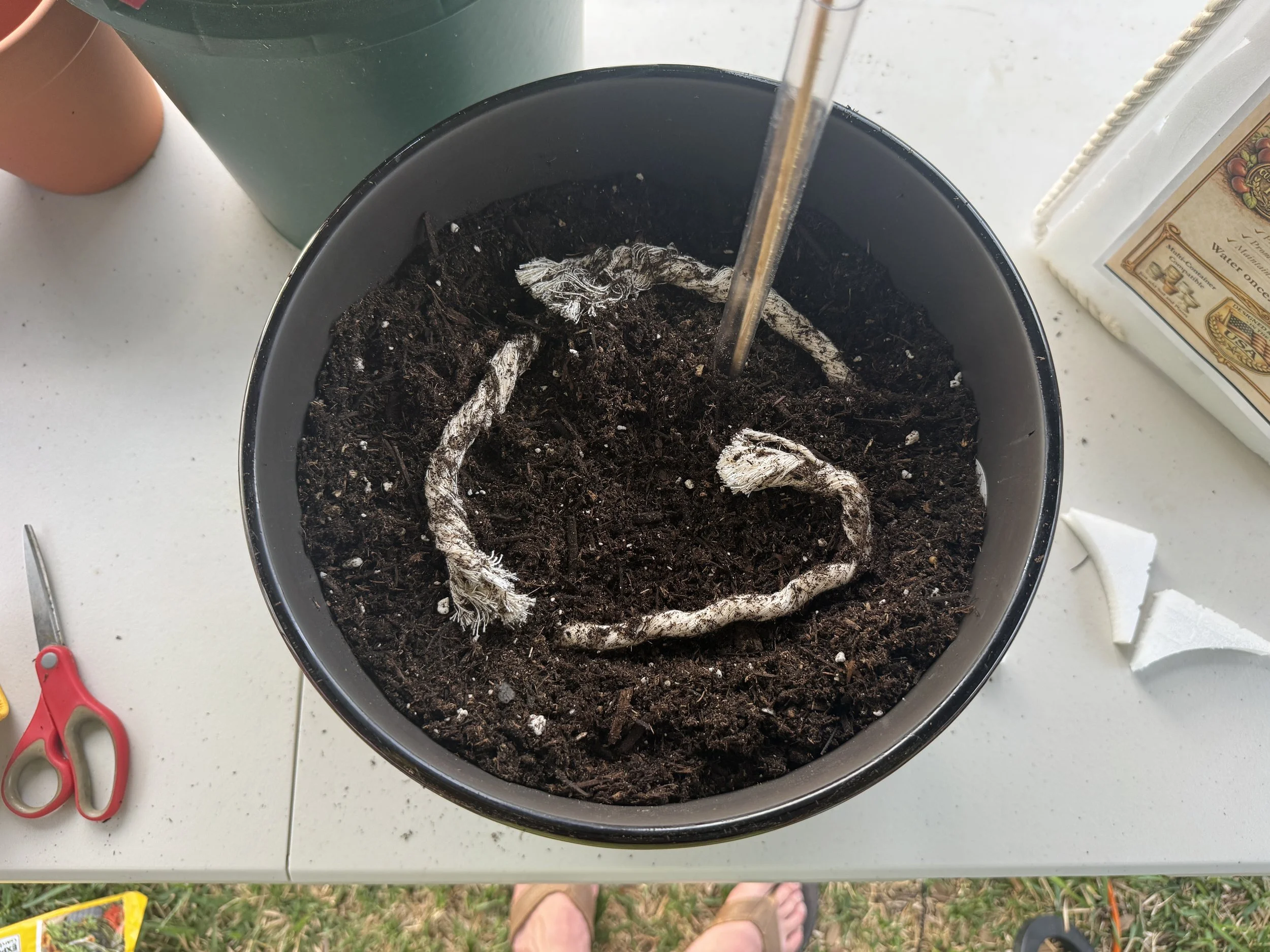
The Bucket Oasis can improve performance by stabilizing water movement:
Where it helps:
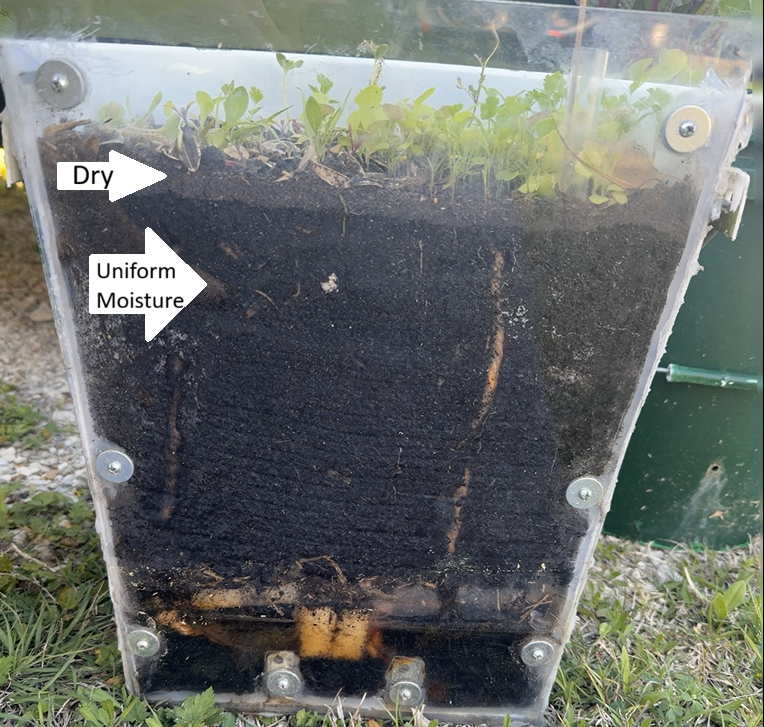
Keeps moisture more evenly distributed
Reduces dry pockets from uneven soil structure
Helps rehydrate peat-based soils
Reduces nutrient loss from frequent top watering
Because water is supplied gradually from below:
soil stays more consistently active
roots have more reliable access to moisture
Where it does not help:
Does not add nutrients
Does not fix poor structure
Does not replace proper soil composition
So while it doesn’t “fix” poor soil, it can make it perform significantly better.
How the Bucket Oasis Supports Soil Performance Overall
A well-designed soil mix performs best when moisture is stable.
The Oasis helps by:
Reducing water channeling
Maintaining consistent moisture zones
Supporting more uniform root development
This is especially valuable in dense plantings and mixed containers.
Source:
https://www.fao.org/3/i2800e/i2800e.pdf
Simple Upgrade Strategy (High ROI)
If starting with cheap soil:
Add 20–30% compost
Add 10–20% perlite
This improves:
Nutrient content
Aeration
Moisture balance
Combined with consistent watering, this setup can approach premium performance at a lower cost.
The Takeaway
Not all soils are equal—and in containers, the differences matter more.
Research and practical results show:
Cheap soils often lack consistency and nutrients
Premium mixes improve structure and performance
Soil must match plant type
Water consistency determines how well soil performs
The goal isn’t just better soil.
It’s a system where soil and water work together—so plants can consistently access what they need.