
Why Your Plants Keep Dying (Even When You’re Doing Everything Right)
You bought the right plant.
You used good soil.
You watered it regularly.
And it still died.
If that’s happened more than once, it’s easy to assume the problem is you.
It’s not.
In most cases, plant failure isn’t caused by lack of effort—it’s caused by inconsistent conditions that aren’t visible or obvious.
The Hidden Reality: Most Plant Problems Aren’t What They Seem
When a plant declines, the symptoms are usually vague:
yellowing leaves
drooping
slow growth
browning edges
The problem is that multiple causes create the same symptoms.
For example:
Overwatering → root oxygen loss → yellowing
Underwatering → dehydration → yellowing
Nutrient issues → uptake disruption → yellowing
This overlap leads to incorrect fixes.
Research and extension guidance confirm that watering-related issues are the most common cause of plant failure in containers.
Source:
https://extension.umn.edu/planting-and-growing-guides/watering-container-plants
Why “Doing Everything Right” Still Fails
Most plant care advice focuses on actions:
water regularly
use good soil
provide sunlight
But plants don’t respond to actions—they respond to conditions over time.
And those conditions are constantly changing.
In containers, small changes have big effects:
temperature swings
soil drying rates
water retention differences
root space limitations
Research shows that plant growth is highly sensitive to fluctuations in soil moisture and root-zone conditions.
Source:
https://www.fao.org/3/i2800e/i2800e.pdf
So even if your actions are correct, inconsistent conditions can still lead to failure.
The Biggest Hidden Variable: Water Inconsistency
Water is the most unstable part of plant care.
In container systems:
Soil can go from wet to dry in 24–48 hours
Water doesn’t distribute evenly
Different parts of the container hold different moisture levels
This creates cycles:
saturation → drying → rewatering
Each cycle stresses the plant.
Studies show that plants exposed to fluctuating moisture conditions experience reduced growth and efficiency compared to stable moisture environments.
Source:
https://www.sciencedirect.com/science/article/pii/S0304423805003262
Why Soil and Containers Make It Worse
Even with “good soil,” performance can vary.
Cheap or inconsistent mixes:
create dry pockets
repel water when dry
hold excess moisture in certain areas
Container design also plays a role:
poor drainage traps water
small containers dry too quickly
uneven materials affect moisture behavior
These factors are often invisible—but they directly impact plant health.
The Real Problem: System Instability
Most plant failures are not caused by a single mistake.
They are caused by a system that produces inconsistent conditions.
Water levels swing too much
Nutrients fluctuate
Roots are repeatedly stressed
Plants don’t fail instantly—they decline over time as stress accumulates.
Why Plants Thrive on Stability, Not Perfection
Plants don’t need perfect care.
They need:
consistent moisture
stable root conditions
predictable nutrient access
Research consistently shows that stable growing conditions lead to better plant performance, improved root development, and higher resilience.
Source:
https://www.fao.org/3/i2800e/i2800e.pdf
This is why professional growing systems focus on control and consistency—not guesswork.
How the Bucket Oasis Reduces System Instability
One of the biggest sources of instability is watering.
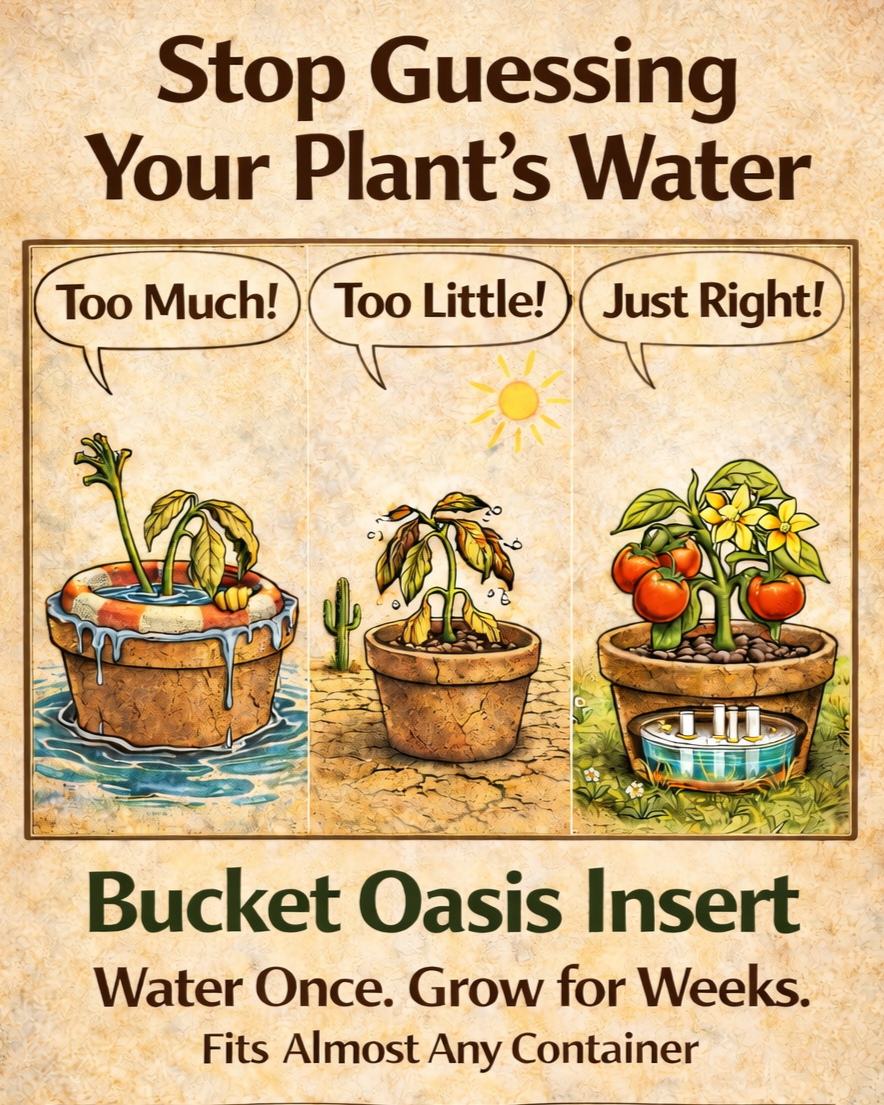
The Bucket Oasis changes how water is delivered:
A reservoir stores water below the soil
Wicks move moisture upward gradually
Plants draw water as needed
This reduces:
overwatering spikes
dry-out periods
uneven moisture distribution
Instead of reacting to plant stress, the system helps maintain a more stable environment.
Why This Changes Outcomes
When conditions become more stable:
roots experience less stress
nutrient uptake becomes more consistent
growth becomes more predictable
For most people, this means:
fewer plant losses
less guesswork
more confidence
The difference isn’t effort—it’s consistency.
Reframing the Problem
If your plants have died before, it doesn’t mean you lack skill.
It means the system you were using relied too much on:
timing
memory
perfect execution
Plants don’t thrive under those conditions.
They thrive when the environment supports them consistently.
The Takeaway
Plant care isn’t about doing everything right—it’s about reducing what can go wrong.
Research shows that:
inconsistent watering is a leading cause of failure
fluctuating soil conditions stress plants
stable systems improve growth and resilience
When you shift from managing plants to managing systems, everything changes.
Because healthy plants aren’t the result of perfect actions.
They’re the result of consistent conditions.
