
Best Containers for Plants (And Why Drainage Matters More Than Size)
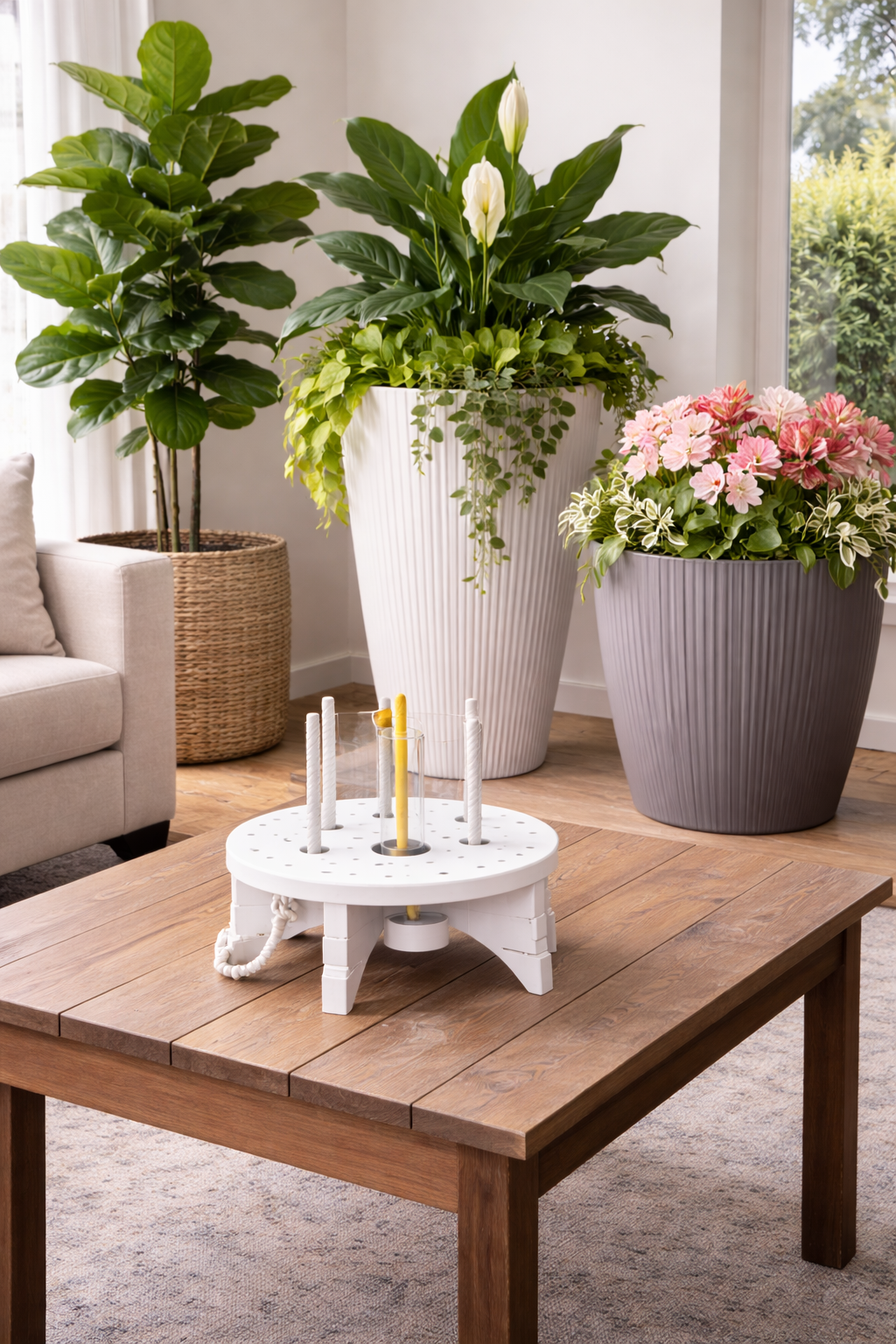
When choosing a container for plants, most people focus on size.
Bigger pot = better plant, right?
Not exactly.
Research and real-world results show that how water moves through a container matters more than the container size itself. A perfectly sized pot with poor drainage can fail, while a smaller, well-managed container can thrive.
Why Drainage Matters More Than Size
Plants don’t just need water—they need oxygen at the roots.
In containers:
Too much water = oxygen deprivation
Too little water = dehydration
Inconsistent moisture = root stress
The balance between water and air is what determines plant health.
Research confirms that poor drainage reduces oxygen in the root zone, limiting growth and increasing disease risk.
Source:
https://www.fao.org/3/i2800e/i2800e.pdf
This is why drainage—not just container size—is the critical factor.
Plastic vs Terracotta vs Fabric Containers
Different materials control moisture differently.
Plastic containers
Retain moisture longer
Lightweight and inexpensive
Risk: overwatering if drainage is poor
Best for:
beginners
moisture-loving plants
Terracotta (clay) pots
Porous material allows water to evaporate
Soil dries faster
Naturally improves aeration
Best for:
succulents
plants sensitive to overwatering
Tradeoff:
requires more frequent watering
Fabric pots (grow bags)
Allow air pruning of roots
Excellent drainage and aeration
Prevent root circling
Research shows that aerated root systems improve root branching and overall plant growth.
Source:
https://extension.umd.edu/resource/growing-plants-containers
Tradeoff:
dry out quickly
require more frequent watering
Common Drainage Myths (That Cause Problems)
Many container gardening mistakes come from outdated advice.
Myth 1: “Add rocks at the bottom for drainage”
Reality:
Creates a perched water table
Can trap water above the rock layer
Source:
https://extension.umd.edu/resource/drainage-container-gardening
Myth 2: “More drainage holes always fix overwatering”
Reality:
Drainage holes help excess water exit
But they don’t fix poor watering habits or soil issues
Myth 3: “Let the container fully dry out between watering”
Reality:
Causes moisture swings
Stresses roots
Reduces growth consistency
Drain-Through Systems (Traditional Approach)
Most containers rely on top watering and drainage holes.
How it works:
Water is applied from above
Excess drains out the bottom
Limitations:
Uneven water distribution
Nutrient loss through runoff
Frequent watering required
High variability in moisture levels
Research shows that water movement through soil is often uneven, leading to channeling and dry pockets.
Source:
https://www.fao.org/3/i2800e/i2800e.pdf
Reservoir Systems (A Different Approach)
Reservoir-based containers store water below the soil and allow it to move upward.
Benefits:
More consistent moisture
Reduced water loss
Less frequent watering
Improved water-use efficiency
Wick irrigation research shows that plants can access water more consistently when it is supplied from a reservoir system.
Drain-Through vs Reservoir Systems (Side-by-Side)
Drain-through:
Water added manually
Excess lost immediately
High variability
Reservoir:
Water stored and reused
Gradual delivery
More stable root environment
The difference isn’t just convenience—it’s consistency.
How the Bucket Oasis Converts Almost Any Container
One of the limitations of container gardening is that you’re often stuck with whatever container you have.
The Bucket Oasis changes how the container behaves.
Adds a bottom reservoir to standard containers
Uses wicks to move water upward into soil
Reduces reliance on top watering
This effectively turns:
plastic pots
buckets
decorative containers
into more controlled watering systems.
Instead of depending entirely on drainage holes and timing, the system introduces:
stored water
gradual delivery
more stable moisture conditions
Why This Matters More Than Container Type
Plastic vs terracotta vs fabric matters—but less than how water is managed.
A well-designed watering system can:
reduce overwatering risk
prevent dry-out cycles
improve root stability
This means:
a basic plastic container can perform like a higher-end system
plant care becomes more predictable
fewer corrections are needed
Choosing the Right Container (Simple Rules)
For most setups:
Choose size based on plant root needs
Ensure drainage exists (at minimum)
Match material to your watering habits
Prioritize consistent moisture over container type
The Takeaway
Container success isn’t determined by the pot—it’s determined by how water behaves inside it.
Research and practical results show:
root oxygen and moisture balance drive plant health
drainage mistakes are a leading cause of failure
consistent water delivery outperforms reactive watering
The best container isn’t just the one you buy.
It’s the one that creates a stable environment for roots.
Because when water is controlled, everything else becomes easier.
