
Container Garden Heat: What Happens to Soil, Water, and Roots in Summer (And When It Becomes Dangerous)
Container gardening changes one major variable that most people underestimate: temperature
Unlike in-ground soil, containers are fully exposed to sun, air, and heat—on all sides. When summer hits, this creates conditions that can stress or damage plants much faster than expected.
Why Containers Heat Up Faster Than Ground Soil
In-ground soil is buffered by:
surrounding earth
deeper moisture reserves
thermal mass
Containers are not.
They:
absorb heat from all sides
have limited soil volume
lose moisture quickly
Research shows that container soils can reach significantly higher temperatures than field soil under the same conditions.
Source:
https://extension.psu.edu/container-gardening
What Happens to Soil Temperature in Summer
On hot days (85–95°F air temperature):
In-ground soil: ~70–80°F
Container soil: can exceed 90–110°F, especially in direct sun
Dark containers (black plastic) can increase this even further.
High soil temperatures directly impact root function.
How Heat Affects Roots
Roots are more sensitive to heat than leaves.
Most plant roots perform best between:
→ 60–75°F soil temperature
As soil temperatures rise:
~85°F → reduced root efficiency
~95°F → root stress begins
~104°F (40°C) → root damage possible
~113°F (45°C) → root death likely
Research confirms that root growth declines sharply as soil temperatures exceed optimal ranges.
Source:
https://www.sciencedirect.com/science/article/pii/S0304423805003262
[What Happens to Moisture in Hot Containers
Heat doesn’t just affect temperature—it changes water behavior.
In hot conditions:
evaporation increases
transpiration increases
soil dries faster
In small or exposed containers:
→ soil can dry out in less than 24 hours
This creates rapid cycles:
fully moist → dry → rewatered
These swings stress roots and reduce nutrient uptake.
The Hidden Risk: Heat + Dryness Together
The most dangerous condition isn’t just heat—it’s:
→ hot + dry soil
When soil dries:
water is unavailable
root surfaces heat up faster
oxygen exchange is disrupted
Dry soil heats more quickly than moist soil.
This creates a feedback loop:
heat dries soil
dry soil heats more
roots become stressed or damaged
When Plants Are at Real Risk
Plants begin to experience risk when:
soil temperature exceeds ~90°F
moisture drops significantly
roots are exposed to rapid fluctuations
High-risk scenarios:
black plastic pots in direct sun
small containers (<10")
inconsistent watering
low organic matter soils
Under these conditions, roots can:
shut down growth
lose function
become permanently damaged
Why Top Watering Makes Heat Stress Worse
Top watering during heat often leads to:
uneven moisture distribution
rapid evaporation from the surface
water loss before roots can fully absorb it
This creates:
dry upper soil
overly wet lower soil (temporarily)
inconsistent root conditions
How Stable Moisture Helps Regulate Temperature
Water acts as a thermal buffer.
Moist soil:
heats more slowly
cools more gradually
protects root systems
Research shows that soil moisture significantly influences soil temperature stability.
Source:
https://www.fao.org/3/i2800e/i2800e.pdf
This is one of the most overlooked advantages of consistent watering systems.
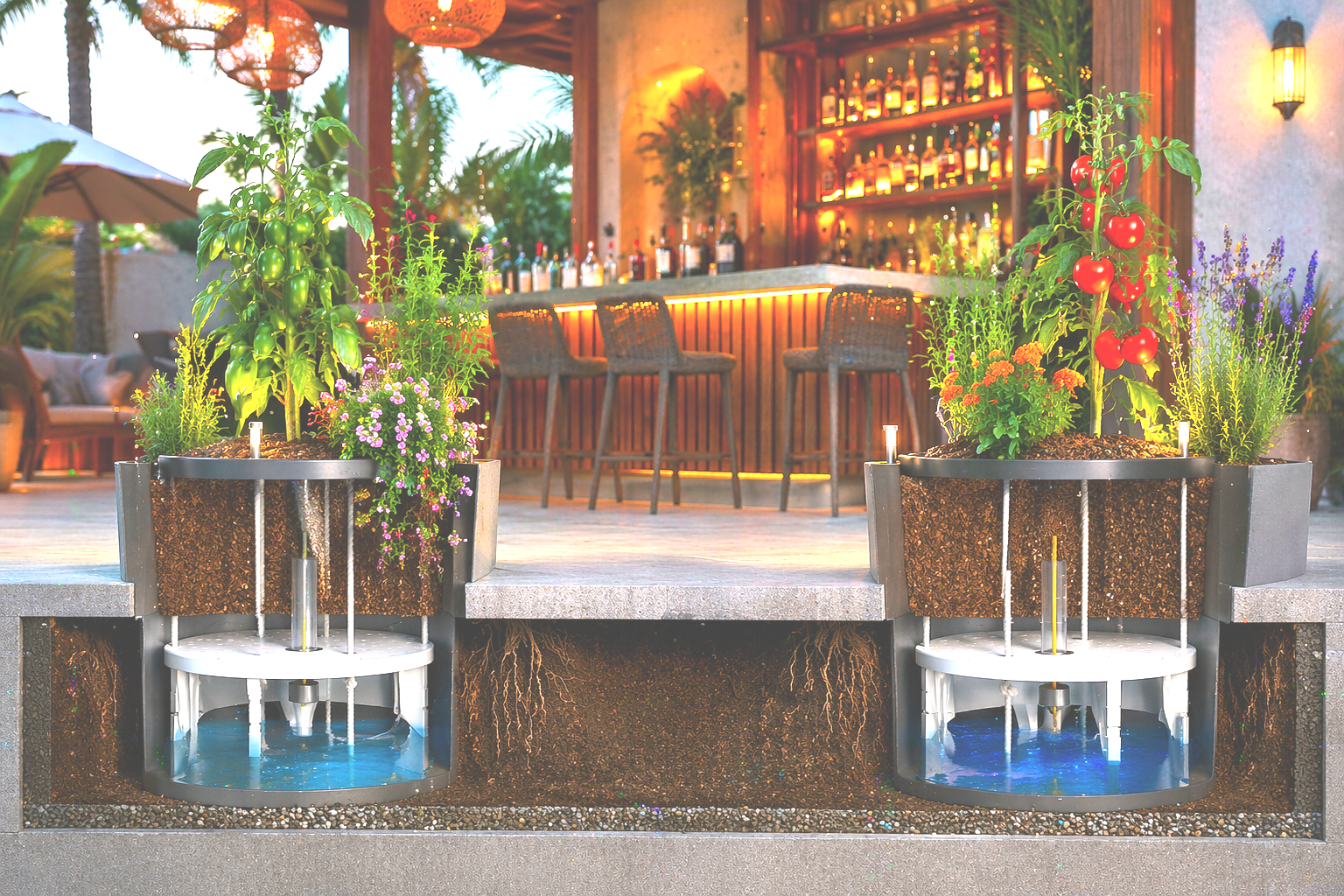
How the Bucket Oasis Helps in Hot Conditions
The Bucket Oasis changes how water behaves during heat.
1) Continuous Moisture Supply
Water is always available from the reservoir, reducing rapid dry-out cycles.
2) Reduced Evaporation Loss
Water is supplied from below instead of exposed at the surface.
3) More Stable Soil Moisture
Soil remains consistently hydrated rather than cycling between extremes.
4) Temperature Buffering
Because moisture is maintained, soil temperatures fluctuate less dramatically.
What This Means for Roots
With more stable moisture:
roots stay cooler
oxygen balance is preserved
stress cycles are reduced
Instead of reacting to heat spikes, the root system remains more stable.
Additional Ways to Reduce Container Heat
To further protect plants:
Use lighter-colored containers
Increase container size (more thermal mass)
Add mulch to reduce surface evaporation
Provide partial afternoon shade
Elevate containers to improve airflow
These strategies complement consistent watering.
The Takeaway
Container gardening introduces a hidden challenge:
→ heat amplification
Research shows:
container soil heats faster than ground soil
high temperatures reduce root function
moisture loss accelerates under heat
The most dangerous condition is:
→ hot, dry, unstable soil
The solution isn’t just watering more—it’s maintaining consistent moisture to stabilize both water and temperature.
Because when roots stay cool, hydrated, and oxygenated, plants can continue growing—even in peak summer conditions.
