
Electroculture and Container Gardening: Ancient Gardening Secret or Modern Myth?
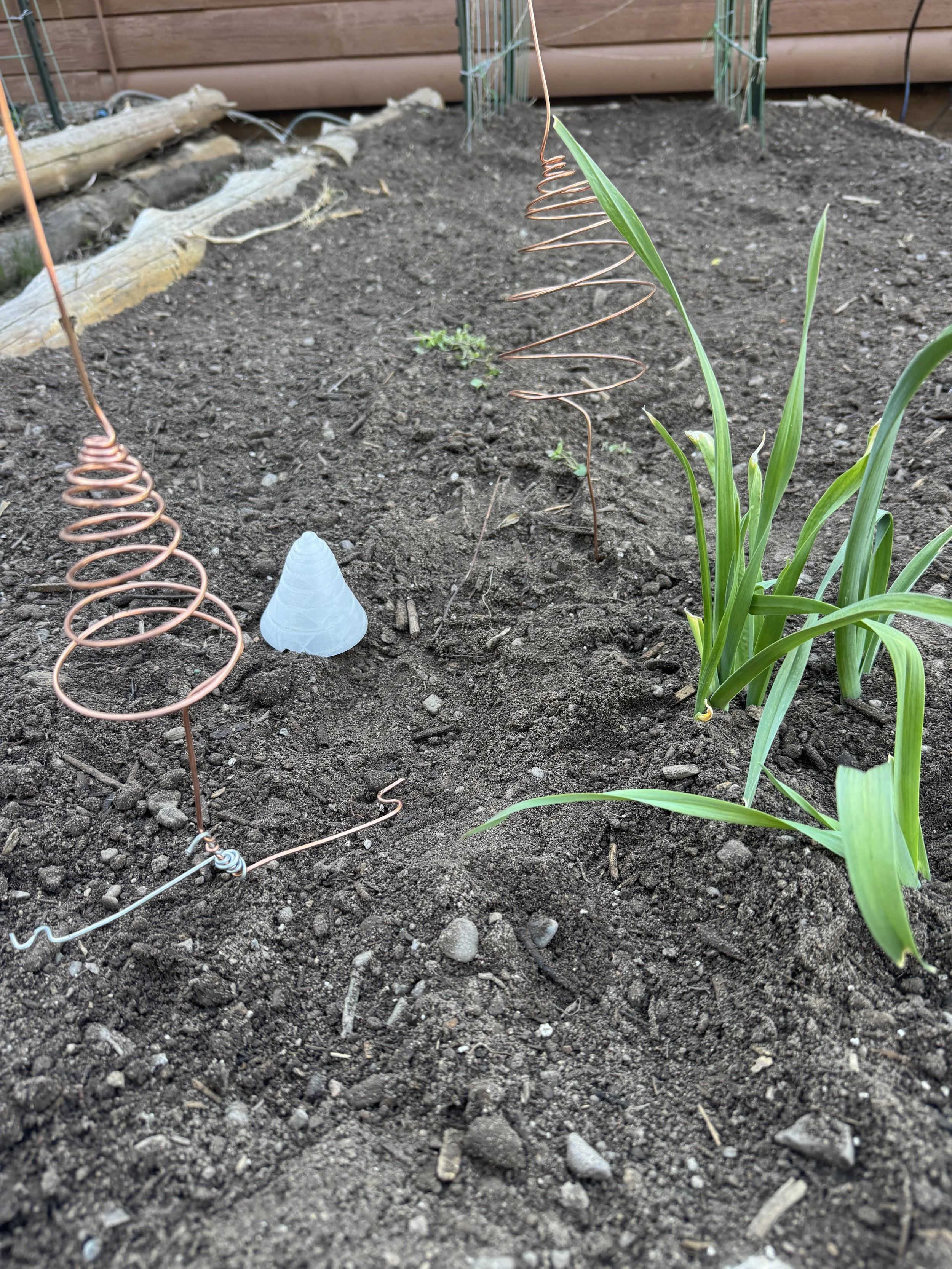
Electroculture may be the most controversial gardening trend on the internet today.
Supporters claim simple copper antennas can:
increase yields
accelerate growth
improve germination
reduce fertilizer requirements
Critics argue that electroculture is little more than gardening folklore wrapped in modern social media hype.
So who's right?
The truth is more interesting than either side suggests.
Modern science has proven that plants can sense and respond to electrical fields.
What remains uncertain is whether passive copper antennas placed in gardens can generate enough electrical influence to consistently improve plant growth.
Let's separate the science, the history, and the speculation.
Why Electroculture Has Suddenly Gone Viral
Searches for:
Electroculture gardening
Copper antenna gardening
Does electroculture work?
Electroculture for tomatoes
Electroculture results
have exploded over the last few years.
Thousands of gardeners are posting photos showing:
giant vegetables
larger flowers
faster seedlings
unusual root growth
The appeal is obvious:
If a simple copper antenna could increase harvests without:
chemicals
fertilizers
electricity
it would be one of the most important gardening discoveries in decades.
But extraordinary claims require extraordinary evidence.
What Is Electroculture?
Electroculture is the practice of placing conductive materials near plants in an attempt to collect or influence naturally occurring electrical energy.
Common designs include:
copper spiral antennas
copper rods
copper-zinc antennas
Lakhovsky rings
galvanized steel antennas
Many systems are based on theories that atmospheric electricity and naturally occurring earth currents can be collected and redirected toward plants.
The Bucket Oasis electroculture pamphlet describes several of these historical concepts and antenna designs.
The History of Electroculture
Electroculture is not new.
Experiments involving electricity and plant growth date back more than 200 years.
Interest grew throughout Europe during the 1800s and early 1900s as researchers explored:
electrical stimulation
atmospheric electricity
charged irrigation water
conductive antennas
One of the most frequently cited inventors was Justin Christofleau, who patented copper-zinc antenna systems during the 1930s. Historical reports claimed significant improvements in crop growth and yields.
Another well-known figure was Georges Lakhovsky, who developed open-ring antenna systems based on theories involving biological oscillations.
Many of these early experiments reported impressive results.
However, most lacked the controls required by modern scientific standards.
What Science Has Proven
This is where the discussion becomes fascinating.
Modern plant science has clearly demonstrated that plants respond to electrical stimuli.
Researchers have shown:
roots can detect electric fields
roots can change direction when exposed to electric fields
plants generate internal electrical signals
electrical gradients can influence root behavior
This phenomenon is known as:
Electrotropism
Electrotropism is the ability of roots to sense and respond to electrical fields.
Recent research demonstrated that plant roots actively redirect growth when exposed to external electric fields.
Research:
https://pmc.ncbi.nlm.nih.gov/articles/PMC10980514/
Additional research:
https://academic.oup.com/plphys/article/194/4/2697/7503512
Maize Root Studies
Researchers studying maize roots found that roots consistently curved in response to controlled electric fields.
Research:
https://academic.oup.com/plphys/article/94/3/913/6088627
Additional study:
https://academic.oup.com/plphys/article/101/3/1107/6066131
The important takeaway:
Plants absolutely can detect and respond to electrical environments.
This is established science.
What Science Has NOT Proven
The unanswered question is:
Can passive copper antennas generate enough electrical influence to meaningfully improve plant growth?
Most electrotropism studies involve:
measured voltages
laboratory equipment
controlled electrical fields
repeatable testing conditions
Those experiments are very different from placing a copper spiral in a vegetable garden.
At present:
There is no scientific consensus showing that passive electroculture antennas consistently improve plant growth under real-world gardening conditions.
The Micronutrient Theory
One of the most plausible explanations for some reported electroculture success has nothing to do with electricity.
Many electroculture systems contain:
copper
zinc
galvanized steel
These materials are legitimate plant micronutrients.
Over time:
copper oxidizes
zinc dissolves slowly
trace minerals enter the soil
Your Bucket Oasis electroculture design specifically incorporates zinc, which may provide supplemental micronutrients independent of any electrical effect.
This could partially explain some positive observations.
What Do Scientific Reviews Say?
Recent reviews examining plant responses to electrical fields concluded that electric fields can influence:
germination
growth
plant physiology
stress responses
Research Review:
https://www.sciencedirect.com/science/article/pii/S0304423824001511
Additional Review:
https://www.emf-portal.org/en/article/33329
However, these reviews primarily evaluate:
active electrical systems
applied voltages
controlled field strengths
not passive garden antennas.
This distinction is extremely important.
Why Container Gardening Is the Perfect Electroculture Test
One of the biggest problems in electroculture research is inconsistency.
Gardeners often compare:
one plant
versusone plant
without controlling for:
watering
fertilizer
soil
sunlight
genetics
Container gardening allows much tighter control.
For example:
Control Container
same soil
same plant variety
same fertilizer
no antenna
Test Container
same soil
same plant variety
same fertilizer
antenna installed
This makes differences easier to measure.
Why the Bucket Oasis May Be the Ideal Electroculture Platform
The largest uncontrolled variable in most container gardens is:
→ watering.
Research consistently shows moisture stress can dramatically affect plant performance.
Even small drought cycles can reduce:
growth
yield
root development
The Bucket Oasis helps stabilize:
soil moisture
root hydration
water availability
This creates a more controlled growing environment.
If electroculture truly has an effect, reducing watering variability should make that effect easier to detect.
In other words:
The Oasis doesn't prove electroculture works.
But it may help gardeners perform more reliable experiments.
How to Run Your Own Electroculture Experiment
If you're curious about electroculture:
Become your own researcher.
Use:
Container A
Bucket Oasis
no antenna
Container B
Bucket Oasis
electroculture antenna
Keep everything else identical.
Track:
germination percentage
plant height
flowering date
fruit count
harvest weight
Most gardeners rely on memory.
Data is far more useful.
What Results Should Gardeners Realistically Expect?
Current scientific evidence does not support claims such as:
200% yield increases
eliminating fertilizer requirements
guaranteed pest resistance
guaranteed disease resistance
Research-based institutions remain skeptical of many passive electroculture claims.
Michigan State Extension discussion:
https://ask.extension.org/kb/faq.php?id=923440
Washington State University review:
https://s3.wp.wsu.edu/uploads/sites/2083/2024/07/24-07-20-Electroculture.pdf
However, science also confirms that plants interact with electrical environments.
The question is not whether plants respond to electricity.
The question is whether passive garden antennas generate enough electrical influence to create measurable improvements.
That question remains open.
The Most Interesting Possibility
The most exciting outcome may not be that electroculture is entirely right or entirely wrong.
It may be that certain:
crops
soils
climates
growing conditions
respond differently.
If that's true, thousands of gardeners running careful experiments may eventually discover patterns that formal research has not yet fully explored.
The Takeaway
Electroculture sits at the intersection of:
historical gardening practice
modern plant science
citizen experimentation
Science has clearly demonstrated:
electrotropism exists
plants respond to electrical fields
plant growth can be influenced by electrical stimulation under controlled conditions
What remains uncertain is whether passive copper antennas consistently produce meaningful improvements in home gardens.
For curious gardeners, the best approach is simple:
Experiment.
Measure.
Document.
And control as many variables as possible.
Because whether electroculture becomes the next breakthrough in gardening—or remains an interesting historical curiosity—the gardeners collecting real data today will help answer the question tomorrow.
References
Historical Electroculture Research
Bucket Oasis Electroculture Pamphlet (Justin Christofleau, Georges Lakhovsky, historical antenna designs)
Electrotropism Research
https://pmc.ncbi.nlm.nih.gov/articles/PMC10980514/
https://academic.oup.com/plphys/article/194/4/2697/7503512
https://academic.oup.com/plphys/article/94/3/913/6088627
https://academic.oup.com/plphys/article/101/3/1107/6066131
Electric Field and Plant Response Reviews
https://www.sciencedirect.com/science/article/pii/S0304423824001511
https://www.emf-portal.org/en/article/33329
University Reviews of Electroculture Claims
https://ask.extension.org/kb/faq.php?id=923440
https://s3.wp.wsu.edu/uploads/sites/2083/2024/07/24-07-20-Electroculture.pdf
