
Container Garden Pests: How Moisture Management Can Prevent Many Common Infestations
Most gardeners think pest control starts with:
traps
sprays
insecticides
beneficial insects
But many of the most common container garden pests have something else in common:
They thrive in overly wet growing conditions.
In fact, some of the most frustrating container garden pests are often symptoms of moisture imbalance rather than the original problem.
This is especially true in:
indoor plant collections
patio containers
greenhouse growing
self-contained planters
The good news?
Proper moisture management can make containers significantly less attractive to many common pests.
And that's where subirrigation systems like the Bucket Oasis can provide benefits beyond simple watering convenience.
The Hidden Relationship Between Water and Pests
Most pest articles focus on killing pests.
Far fewer discuss why pests appeared in the first place.
Many pests are attracted to conditions created by:
excessive watering
chronically wet soil
poor aeration
decomposing organic matter
algae growth
When moisture remains balanced:
roots stay healthier
oxygen levels remain higher
many pest populations struggle to establish
1. Fungus Gnats
The Most Common Indoor Container Pest
Fungus gnats are tiny flying insects that resemble mosquitoes.
Adult gnats are mostly a nuisance.
The real damage comes from larvae living within the soil.
Larvae feed on:
fungi
decomposing organic matter
root hairs
young roots
Source:
https://extension.umn.edu/houseplants/fungus-gnats
Why Fungus Gnats Love Containers
Female gnats lay eggs in:
→ moist surface soil
Research shows larvae are concentrated primarily within:
→ the upper 1–3 inches of growing media.
Source:
https://ipm.ucanr.edu/PMG/PESTNOTES/pn7448.html
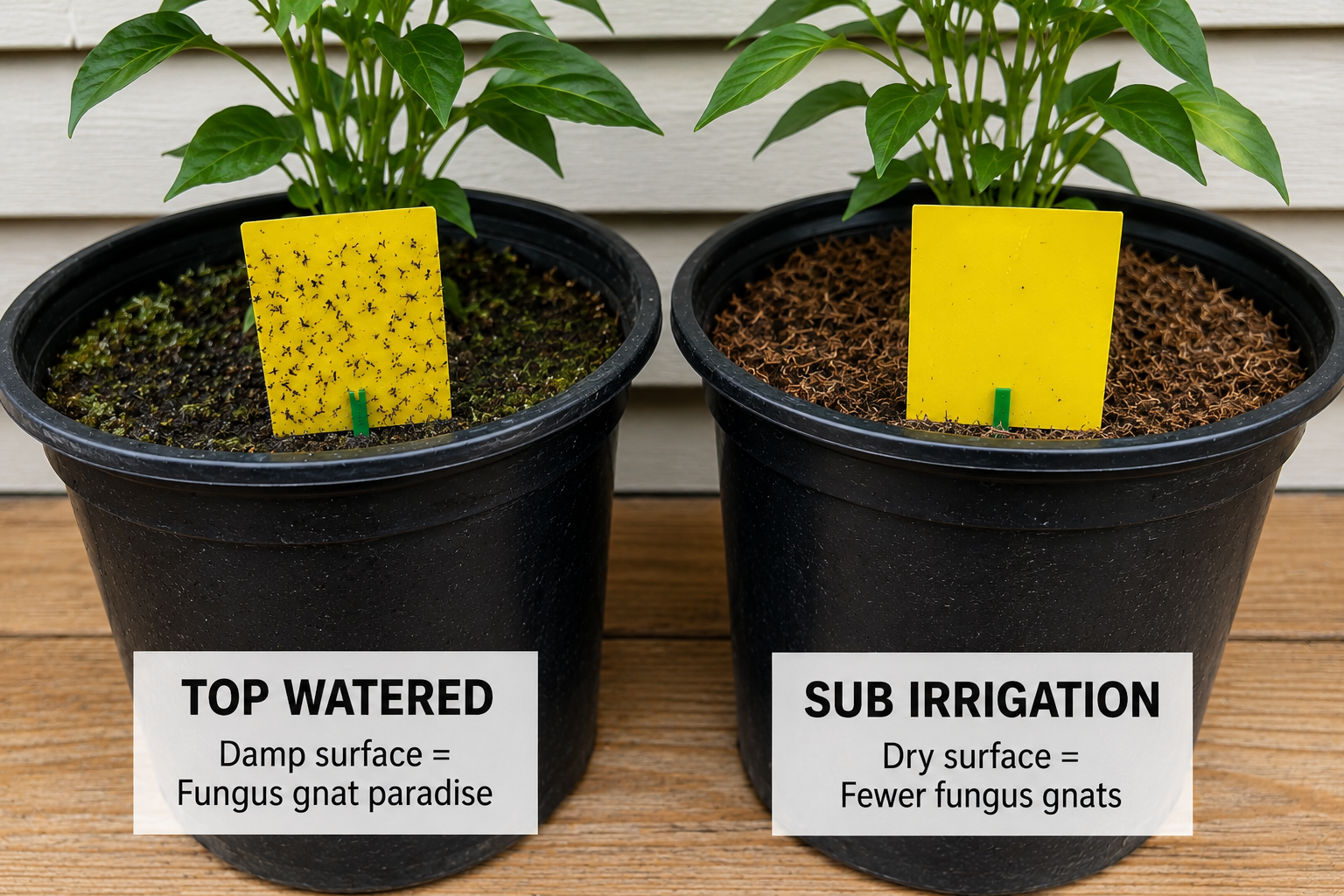
This is important because top watering repeatedly wets exactly the area fungus gnats prefer.
How the Bucket Oasis May Help
Unlike traditional watering:
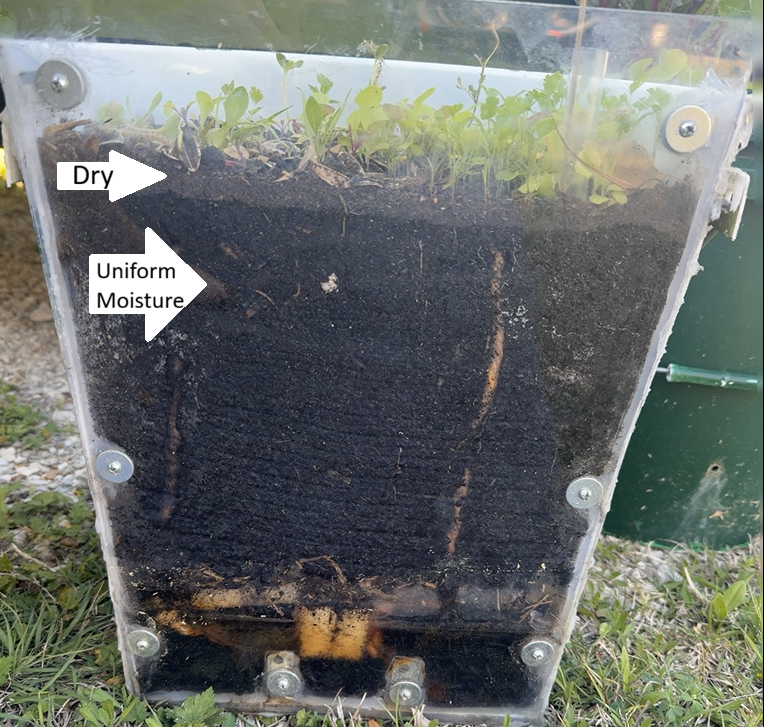
water enters from below
the surface is not repeatedly soaked
moisture remains concentrated near roots
This often results in:
drier soil surfaces
reduced algae
fewer egg-laying sites
The Oasis is not a fungus gnat treatment.
But it may help remove one of the conditions fungus gnats need most:
→ consistently wet surface soil.
2. Shore Flies
Shore flies are often mistaken for fungus gnats.
Unlike fungus gnats:
larvae feed primarily on algae
roots are usually not damaged
However, they thrive under similar conditions:
algae-covered soil
excessive moisture
continuously wet surfaces
Source:
https://ipm.ucanr.edu/PMG/PESTNOTES/pn7448.html
How Oasis May Help
Because algae growth often increases with:
frequent top watering
constantly wet surfaces
maintaining a drier soil surface may help reduce shore fly habitat.
3. Springtails
Springtails are tiny insects that jump when disturbed.
Most species are actually beneficial.
They help decompose:
organic matter
fungi
dead plant material
Source:
https://hort.extension.wisc.edu/articles/springtails/
When Springtails Become a Warning Sign
Large springtail populations often indicate:
excessive moisture
excessive decomposition
poor aeration
While they rarely damage healthy plants, exploding populations can signal moisture problems.
How Oasis May Help
By reducing surface saturation and improving moisture stability, springtail populations may become less noticeable.
4. Root Rot Pathogens
Not all pests have legs.
Some of the most destructive container problems are soil-borne pathogens.
Common examples include:
Pythium
Phytophthora
Rhizoctonia
Source:
https://extension.psu.edu/root-rots-of-houseplants
Symptoms
yellow leaves
stunted growth
wilting despite wet soil
black roots
mushy roots
Many gardeners mistakenly add more water, worsening the problem.
How Oasis May Help
One overlooked advantage of the Bucket Oasis is the air gap between:
the false floor
andthe reservoir
This helps maintain oxygen availability beneath the root zone.
Combined with stable moisture levels, roots may experience fewer extreme wet-dry cycles.
Healthy roots are generally more resistant to disease pressure.
5. Mosquitoes
One common concern with self-watering systems is:
"Won't the reservoir breed mosquitoes?"
Mosquitoes require access to standing water for egg laying.
Source:
https://www.cdc.gov/mosquitoes
Why Covered Reservoirs Matter
The Bucket Oasis reservoir sits beneath:
the false floor
the soil profile
Unlike:
open buckets
bird baths
uncovered rain barrels
the water is largely inaccessible.
This greatly reduces mosquito breeding potential.
6. Slugs and Snails
Outdoor containers can attract:
slugs
snails
especially when conditions remain:
cool
shaded
moist
Source:
https://extension.umn.edu/yard-and-garden-insects/slugs
How Moisture Influences Activity
Slugs lose water rapidly.
As a result they prefer:
wet mulch
wet soil surfaces
damp hiding locations
Containers that remain saturated near the surface often provide ideal habitat.
How Oasis May Help
By keeping moisture lower within the soil profile, Oasis-equipped containers may create less favorable conditions at the surface.
7. Aphids
Aphids are among the most common garden pests.
Source:
https://extension.umn.edu/yard-and-garden-insects/aphids
They attack:
vegetables
flowers
herbs
houseplants
Unlike fungus gnats, aphids are not caused by wet soil.
The Connection to Water Stress
Research shows stressed plants often become more susceptible to insect damage.
Repeated drought cycles can reduce plant vigor.
Healthy plants generally tolerate aphid pressure better than stressed plants.
How Oasis May Help
The Bucket Oasis cannot prevent aphids.
However, reducing drought stress may help plants:
recover faster
maintain growth
tolerate feeding damage
8. Spider Mites
Spider mites often become severe during:
hot weather
drought conditions
low humidity
Source:
https://extension.umn.edu/yard-and-garden-insects/spider-mites
Why Water Stress Matters
Drought-stressed plants are often more vulnerable to mite outbreaks.
Moisture consistency helps plants maintain:
growth
vigor
natural defenses
9. Whiteflies
Whiteflies attack:
tomatoes
peppers
herbs
ornamentals
Source:
https://ipm.ucanr.edu/PMG/PESTNOTES/pn7401.html
Like aphids and spider mites, they are not caused by watering practices.
However, healthier plants generally withstand infestations more successfully.
Which Pests Are Most Directly Affected?
PestStrongly Influenced by Moisture?Potential Oasis BenefitFungus GnatsHighReduced breeding habitatShore FliesHighReduced algae and wet surfacesSpringtailsHighReduced excessive populationsRoot Rot PathogensHighImproved root conditionsMosquitoesHighCovered water sourceSlugs & SnailsModerateLess attractive surface conditionsAphidsIndirectImproved plant vigorSpider MitesIndirectReduced drought stressWhitefliesIndirectHealthier plants tolerate damage better
The Most Important Insight
Many gardeners view pests as separate problems.
In reality, many pest outbreaks begin with environmental conditions.
Excessive moisture can encourage:
fungus gnats
shore flies
springtails
algae
root diseases
Meanwhile drought stress can increase susceptibility to:
aphids
spider mites
whiteflies
The healthiest containers maintain a balance between:
moisture
oxygen
biology
How the Bucket Oasis Fits Into Pest Prevention
The Bucket Oasis is not a pesticide.
It does not kill pests.
What it does is help create conditions that are often less favorable to many common container garden pests.
By:
reducing repeated surface wetting
maintaining stable root-zone moisture
preserving oxygen below the root zone
reducing drought stress
it may help prevent some of the environmental conditions that allow pest populations to explode.
The Takeaway
The best pest control strategy often begins before pests arrive.
Many common container garden problems are directly linked to moisture management.
Research consistently shows that:
overly wet conditions encourage fungus gnats, shore flies, and root diseases
drought stress weakens plants and increases vulnerability to other pests
By maintaining more stable moisture conditions, self-watering systems like the Bucket Oasis can become part of a broader integrated pest management strategy.
Sometimes the most effective way to control pests isn't killing them.
It's making your container a place they don't want to live.
