
The Fertilizer Mistake Most Gardeners Make
Many fertilizer labels recommend feeding:
every 2 weeks
monthly
every watering
The problem is that plants don't consume nutrients based on the calendar.
They consume nutrients based on growth and production.
A healthy plant growing in quality soil may not need additional fertilizer for weeks—or even an entire season.
Before fertilizing, ask:
Is the plant actually showing signs that nutrients are becoming limited?
If the answer is no:
Do not fertilize.
Fertilize Based on What the Plant Is Doing
The goal of fertilizer is not to make a plant larger.
The goal is to remove nutrient limitations.
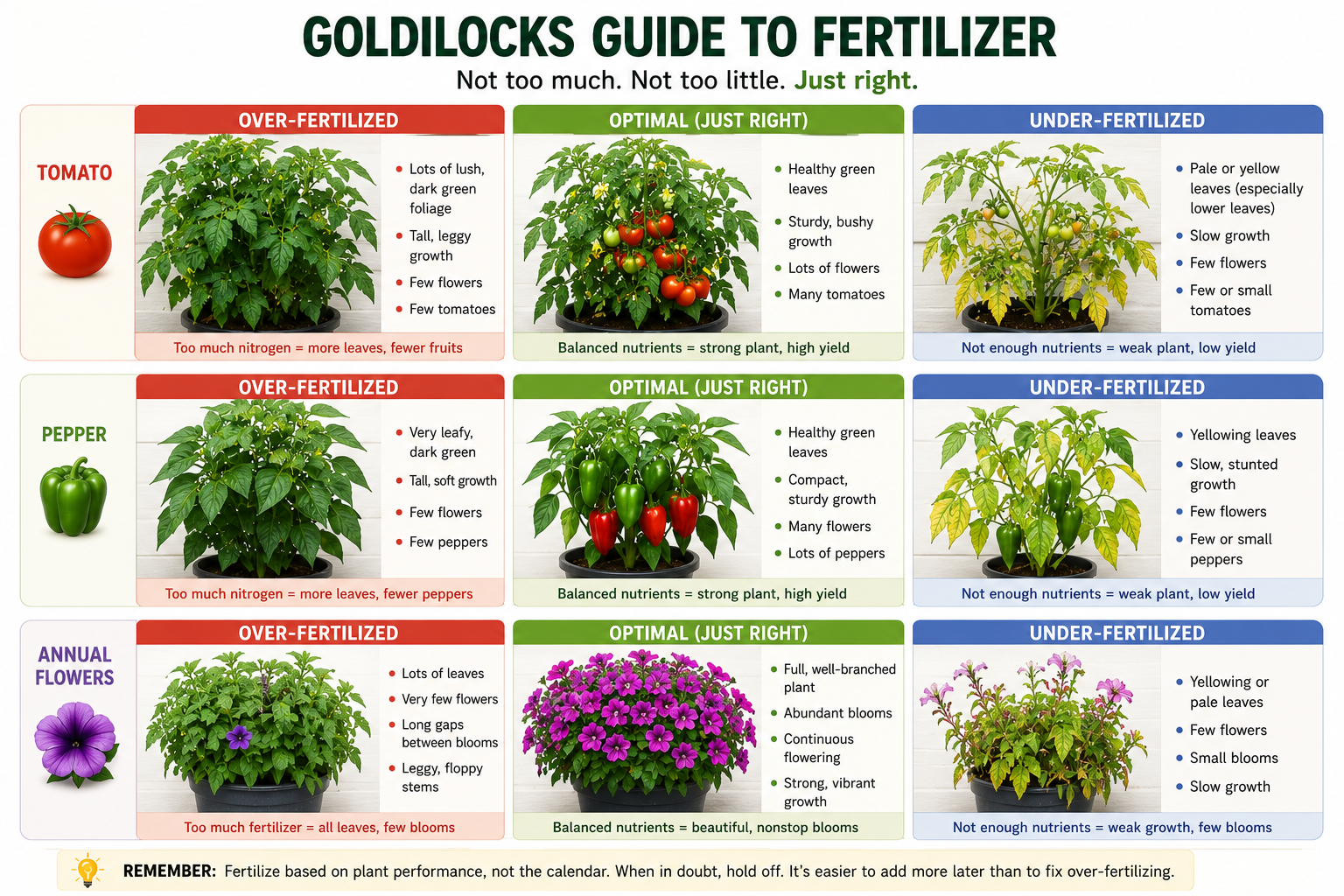
Adding nutrients to a plant that already has everything it needs often creates:
excessive foliage
delayed flowering
weak growth
wasted fertilizer
Tomato Fertilization Guide
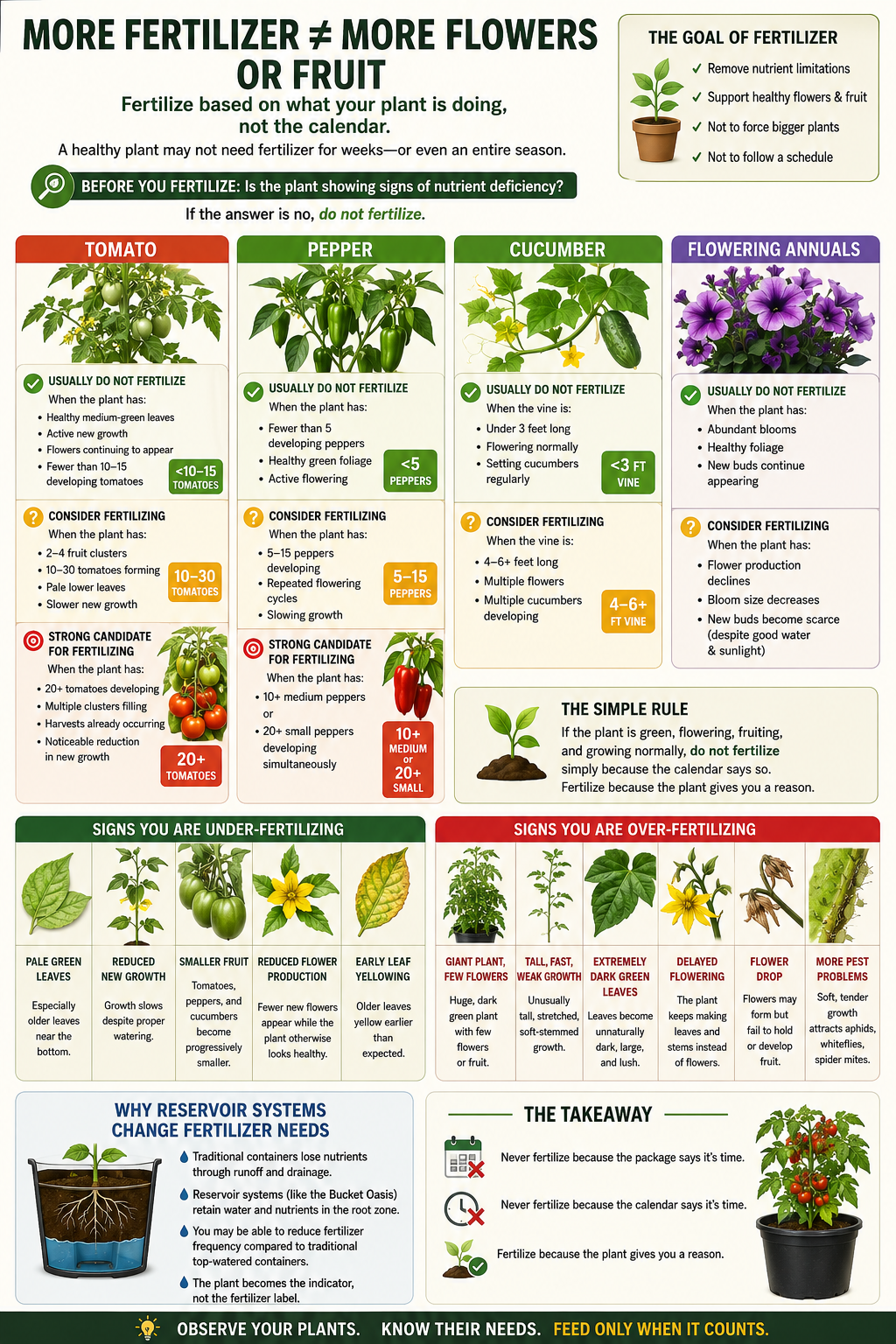
Usually Do Not Fertilize When:
The plant has:
healthy medium-green leaves
active new growth
flowers continuing to appear
fewer than 10–15 developing tomatoes
At this stage the plant is often obtaining sufficient nutrients from the soil.
Consider Fertilizing When:
The plant has:
2–4 fruit clusters actively developing
10–30 tomatoes forming simultaneously
pale lower leaves
noticeably slower new growth
At this point nutrient demand begins increasing rapidly.
Strong Candidate for Fertilization
The plant has:
20+ tomatoes developing
multiple fruit clusters filling simultaneously
harvests already occurring
noticeable reduction in new growth
This is often where container-grown tomatoes begin exhausting available nutrients.
Pepper Fertilization Guide
Usually Do Not Fertilize When:
The plant has:
fewer than 5 developing peppers
healthy green foliage
active flowering
Consider Fertilizing When:
The plant has:
5–15 peppers developing simultaneously
repeated flowering cycles
slowing growth
Strong Candidate for Fertilization
The plant has:
10+ medium peppers
or
20+ small peppers
developing simultaneously.
The nutrient demand at this stage increases significantly.
Cucumber Fertilization Guide
Usually Do Not Fertilize When:
The vine is:
under 3 feet long
flowering normally
setting cucumbers regularly
Consider Fertilizing When:
The vine exceeds:
4–6 feet in length
and simultaneously has:
multiple flowers
multiple cucumbers developing
Flowering Annuals
For petunias, calibrachoa, geraniums, marigolds, and similar flowering plants:
Do not fertilize simply because flowers appear.
Instead monitor flower production.
Usually Do Not Fertilize When:
blooms remain abundant
foliage remains healthy
new flower buds continue appearing
Consider Fertilizing When:
flower production declines noticeably
bloom size decreases
new buds become scarce
despite receiving:
adequate water
adequate sunlight
Signs You Are Under-Fertilizing
Possible symptoms include:
Pale Green Leaves
Especially older leaves near the bottom of the plant.
Reduced New Growth
Growth slows noticeably despite proper watering.
Smaller Fruit
Tomatoes, peppers, and cucumbers become progressively smaller.
Reduced Flower Production
New flowers become less frequent while the plant otherwise appears healthy.
Early Leaf Yellowing
Older leaves begin yellowing earlier than expected.
Signs You Are Over-Fertilizing
Over-fertilization is often more common than under-fertilization in container gardens.
Giant Plant, Few Flowers
One of the most common symptoms.
The plant becomes:
huge
dark green
impressive looking
but produces surprisingly few flowers or fruit.
Tall, Fast, Weak Growth
Plants become:
unusually tall
stretched
soft-stemmed
Growth appears impressive but structural strength decreases.
Extremely Dark Green Leaves
Leaves become:
unnaturally dark
oversized
lush
This often indicates excessive nitrogen.
Delayed Flowering
The plant continues producing:
stems
leaves
branches
instead of flowers.
Flower Drop
Plants may produce flowers but fail to hold them.
Excess nitrogen can shift energy toward vegetative growth.
More Pest Problems
Excessive nitrogen often produces soft, tender growth that attracts:
aphids
whiteflies
spider mites
Research has documented increased insect pressure on heavily fertilized plants.
Why Reservoir Systems Change Fertilizer Needs
Traditional containers frequently lose nutrients through:
runoff
drainage
repeated flushing
Reservoir systems reduce those losses.
The Bucket Oasis helps retain:
water
nutrients
dissolved fertilizer
within the root zone.
As a result, some gardeners may find they can reduce fertilizer frequency compared to traditional top-watered containers.
The plant becomes the indicator.
Not the fertilizer label.
The Rule Most Gardeners Should Follow
Never fertilize because the package says it's time.
Never fertilize because the calendar says it's time.
Fertilize because the plant gives you a reason.
A healthy plant that is:
green
flowering
fruiting
growing normally
may not need any additional fertilizer at all.
Sometimes the best fertilizer application is the one you never make.
